

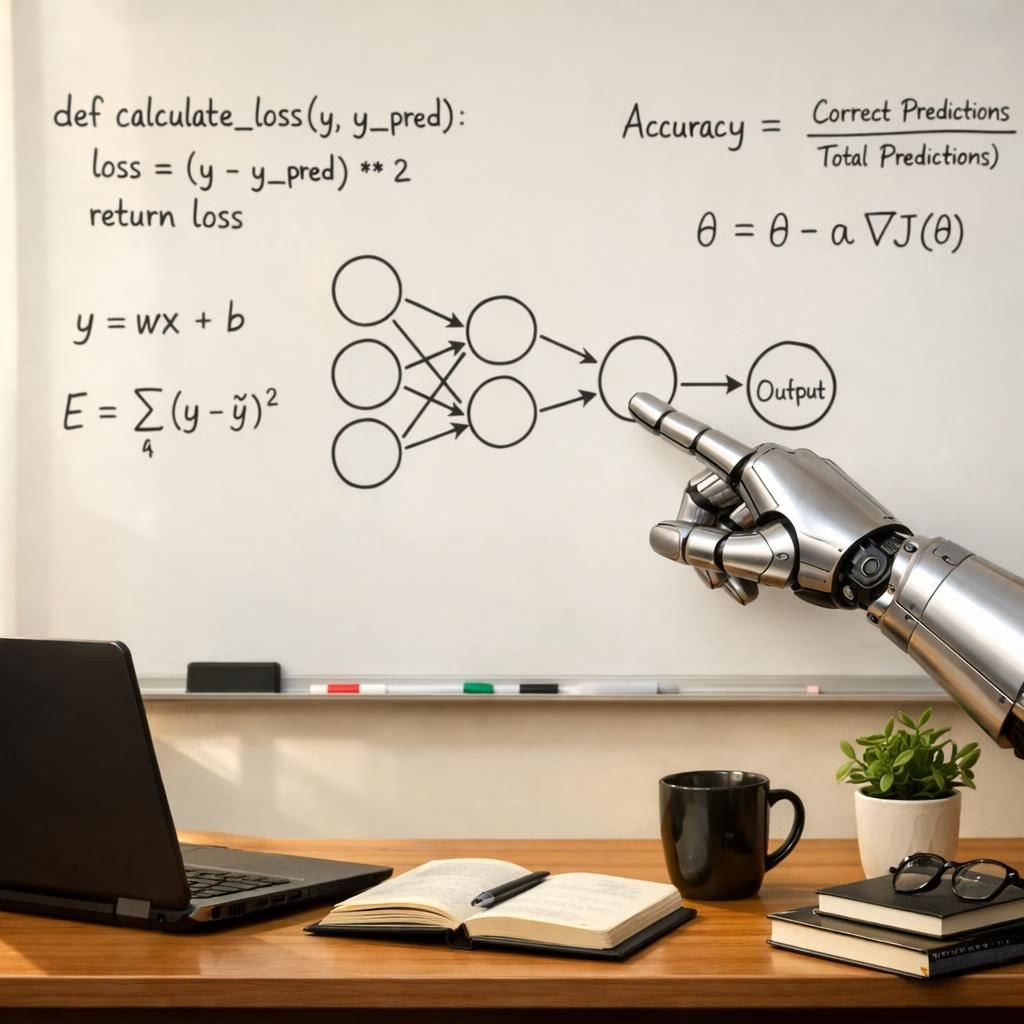
AI is quietly moonlighting as a research-intern in OpenAI’s latest push toward autonomous technical work. The milestone is a system that can function at the level of a research-intern. It handles multi-step coding, math reasoning, and physics-style problems with less human oversight. In plain terms, we watch a clever intern draft code and papers while humans offer the occasional critique with a wink.
On the public stage, OpenAI frames progress as autonomy, not bravado. Pachocki explains the key measure: how long a model works mostly on its own. OpenAI has scheduled a timeline: an research-intern by September 2026. A fully autonomous AI researcher would follow by March 2028. CEO Sam Altman acknowledges there is a risk of missing the mark. He still emphasizes transparency because impact matters. The tone is hopeful, not frantic, and the humor stays proportional to the stakes.
AI progress and the research-intern path toward autonomy
Beyond the buzz, Pachocki notes Codex’s explosive growth. Codex now shoulders much of OpenAI’s programming work. He points to math benchmarks as a north star for better reasoning. These benchmarks are easy to verify. The idea is practical: strong ideas, solid tests, and a clear integration path. The team believes many ideas exist; they just need to assemble them into a coherent workflow that scales.
There is an emphasis on autonomy as a spectrum, not a single leap. OpenAI does not claim a sudden leap to full independence this year. The company emphasizes safeguards and continued human oversight. The aim is to free engineers from repetitive drudgery while preserving judgment. The approach blends optimism with discipline. It invites curiosity and accountability.
Advances are viewed as a path toward research-intern-style work, not a sudden replacement of human researchers.
From codex to math benchmarks: AI meets the research-intern timeline
In practical terms, Codex-like tools could draft experiments, generate code, and organize data. Math benchmarks serve as transparent yardsticks. They are easy to verify and hard to fudge. The philosophy favors useful tools with safety in mind. Designers build, testers test, and researchers review results with care. The goal is faster iteration with safety and direction. The team wants progress that lasts.
OpenAI’s risk handling deserves praise for its measured cadence. The leadership uses milestones, not one giant leap. They share wins and missteps, so the public stays informed. This cadence supports reproducibility and updates. In short, progress is visible and responsible.
Looking ahead to 2026 and beyond, applications include faster engineering, smarter data analysis, and simulation-driven experiments. If the research-intern drafts hypotheses and runs tests with less supervision, progress could grow. Deployment paths would still require checks, but momentum matters. The road remains long and complex, yet the direction feels purposeful and doable with care.
Transparency matters during such a journey. Leaders note ambitious goals may slip timelines, and they own that reality. Honesty earns trust and builds a shared roadmap. The arc toward a fully autonomous researcher is about scale, safety, and learning from mistakes.
Readers who enjoy technical detail with light humor will find value here. The future promises bigger tools, better human-machine collaboration, and clearer autonomy definitions in technical work. The story is evolving, but the direction feels purposeful and doable if we proceed with care.
Original article: Business Insider. Thank you for the original source material that sparked this discussion.
We invite readers to share their thoughts in the comments.
What to watch next for AI teams
- Clear milestones that balance autonomy with safeguards.
- Transparent metrics for reasoning benchmarks and test results.
- Practical pipelines that pair automated drafting with human review.
FAQ
-
What does a research-intern mean in this context?
It denotes a model capable of long, mostly autonomous phases of technical work, with humans stepping in for guidance and safety checks. -
Is the timeline guaranteed?
No. OpenAI acknowledges the risk of delays and stresses transparency to share progress, wins, and missteps alike. -
What could this mean for engineers?
It could reduce repetitive tasks and accelerate iteration, while keeping critical judgment in human hands for now. -
Where can I read more on related tools?
See OpenAI’s Codex materials and governance discussions from credible tech publications for broader context.