

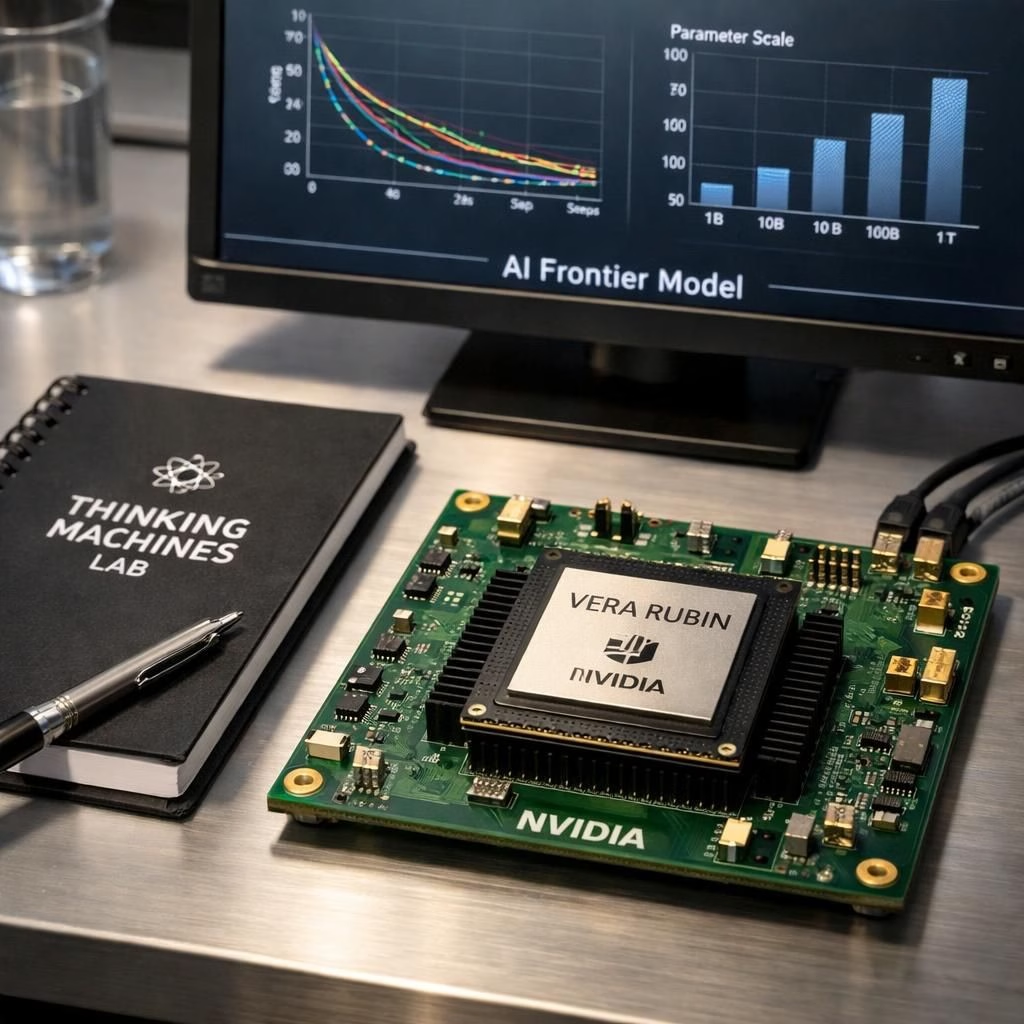
In 2026, AI and [NVIDIA](https://www.geekyopinions.com/tag/NVIDIA) joined Thinking Machines Lab in a multiyear chip deal designed to power frontier model training and scalable AI platforms for enterprise clients. Vera Rubin chips will shoulder the heavy compute for these workloads. [NVIDIA](https://www.geekyopinions.com/tag/NVIDIA) backs Thinking Machines with growth investments and seed rounds. Mira Murati, founder of Thinking Machines, frames the collaboration as expanding human capability rather than replacing jobs. Jensen Huang highlights the partnership as a step forward in knowledge discovery enabled by high-end hardware and diverse talent. The joint messaging emphasizes a human-centered approach to AI progress.
AI and NVIDIA Collaboration: The Frontier in Focus
The Financial Times reported a deal valued in the tens of billions, with a commitment to deploy at least one gigawatt of Vera Rubin compute to support frontier model training and customizable AI platforms. This hardware backbone is paired with Thinking Machines software that translates enterprise data into practical AI services across sectors. The arrangement positions hardware and software as a tightly integrated stack rather than separate product lines.
[NVIDIA](https://www.geekyopinions.com/tag/NVIDIA)’s investment stance in this venture aims to align machine power with software ecosystems. The goal is not merely to ship chips but to enable reliable, production-grade AI workflows for customers who need scale and resilience. Murati notes the mission extends beyond selling hardware; it seeks to amplify human work and unlock new capabilities across industries. The emphasis on human augmentation rather than replacement is a central thread in the talking points from Thinking Machines and its backers, including [NVIDIA](https://www.geekyopinions.com/tag/NVIDIA).
AI and NVIDIA Growth: Vera Rubin in Action
The deal includes a substantial seed and growth financing package that strengthens Thinking Machines’ long-term roadmap. Last year the startup raised about $2 billion in seed funding at a $10 billion valuation, with [NVIDIA](https://www.geekyopinions.com/tag/NVIDIA) among the backers. The Vera Rubin line is pitched as a scalable compute backbone that can accelerate frontier AI research while enabling customizable platforms for enterprise clients. The combined force of hardware and software is framed as a way to accelerate real-world deployments, from healthcare to climate science to finance.
Executives describe Vera Rubin as a capable driver of faster training cycles and more robust model iteration. The plan is to reduce bottlenecks in data pipelines, improve throughput for large models, and provide operators with tooling that keeps models safer and more controllable. The emphasis remains on practical outcomes: faster experimentation, more reliable inference, and governance-ready AI platforms. In this vision, AI progress is a collaborative effort that leverages top-tier hardware as a catalyst for meaningful human outcomes.
Developers and enterprises should anticipate an integrated stack that blends high-end compute with flexible software modules. The intent is to make frontier AI accessible without requiring bespoke hardware every time. By marrying Vera Rubin chips with Thinking Machines’ platform, the partners hope to deliver scalable AI that can be tuned for specific sector needs. The goal is to shorten the path from research to production, with safety and reliability baked into the workflow. The result could be a more approachable frontier AI, where powerful capabilities are available to teams that previously lacked the scale to experiment rapidly.
In practical terms, the collaboration aims to deliver tools that help people do more—think faster, reason deeper, and customize AI services with less friction. The partners present hardware acceleration as the enabler, while software translates compute into tangible outcomes. The human-centric framing is not a token gesture; it guides how the platform will be used to augment decision making, not supplant it. Vera Rubin chips are expected to support larger models and more complex training regimes, which in turn feed into safer and more versatile AI platforms for clients. The combined offering should reduce cycle times from concept to deployment and provide a robust baseline for enterprise-grade AI services in the 2026-2027 window.
We expect the ecosystem around Thinking Machines Lab to grow as the partnership expands. The collaboration could attract additional developers, data scientists, and product teams who want to leverage Vera Rubin compute for bespoke AI platforms. The emphasis on human capability and productivity means training, governance, and auditing will likely be prioritized alongside raw speed. If successful, the program may set a template for other industry players seeking to combine cutting-edge chips with sophisticated software to deliver ready-to-use AI at scale. The result could be a broader, more responsible AI acceleration that benefits organizations and their workforces alike.
We invite readers to share their thoughts in the comments below.
Source attribution: Special thanks to the Financial Times for the original reporting. Original article: Financial Times coverage.
Practical Implications and Examples
- Enterprise readiness: Expect more turnkey AI services that can be deployed with less bespoke hardware planning, thanks to the Vera Rubin–Thinking Machines stack.
- Data governance: The collaboration emphasizes governance tooling and safety controls tied to model training and deployment.
- Industry examples: Healthcare, climate science, and finance stand to benefit from faster experimentation and safer inference cycles.
Frequently Asked Questions
- What is Vera Rubin? A scalable compute backbone designed to accelerate frontier AI research and enterprise-grade platforms.
- What does the deal mean for enterprises? It aims to shorten the path from research to production, with a focus on reliability, safety, and governance.
- Why the human-centric framing? The partners frame AI progress as augmentation that expands human capability rather than replacing workers.
- Where can I read more? See the Financial Times coverage and the Business Today piece linked in References.
- Is this linked to NVIDIA beyond hardware? Yes—the collaboration blends hardware with software to enable scalable AI at scale across industries.
Conclusion: Takeaway and Next Steps
The alliance between Thinking Machines Lab and [NVIDIA](https://www.geekyopinions.com/tag/NVIDIA) signals a deliberate shift toward integrated hardware–software AI platforms. If the plan unfolds as described, enterprises could access safer, faster, and more adaptable frontier AI capabilities at scale—while keeping people at the center of progress. For readers, the practical takeaway is to watch for enterprise-ready AI services that blend powerful compute with governance-friendly tools in the 2026–2027 window.
References
- Business Today: NVIDIA to power Mira Murati’s Thinking Machines Lab deal
- Financial Times coverage
- NVIDIA Newsroom