

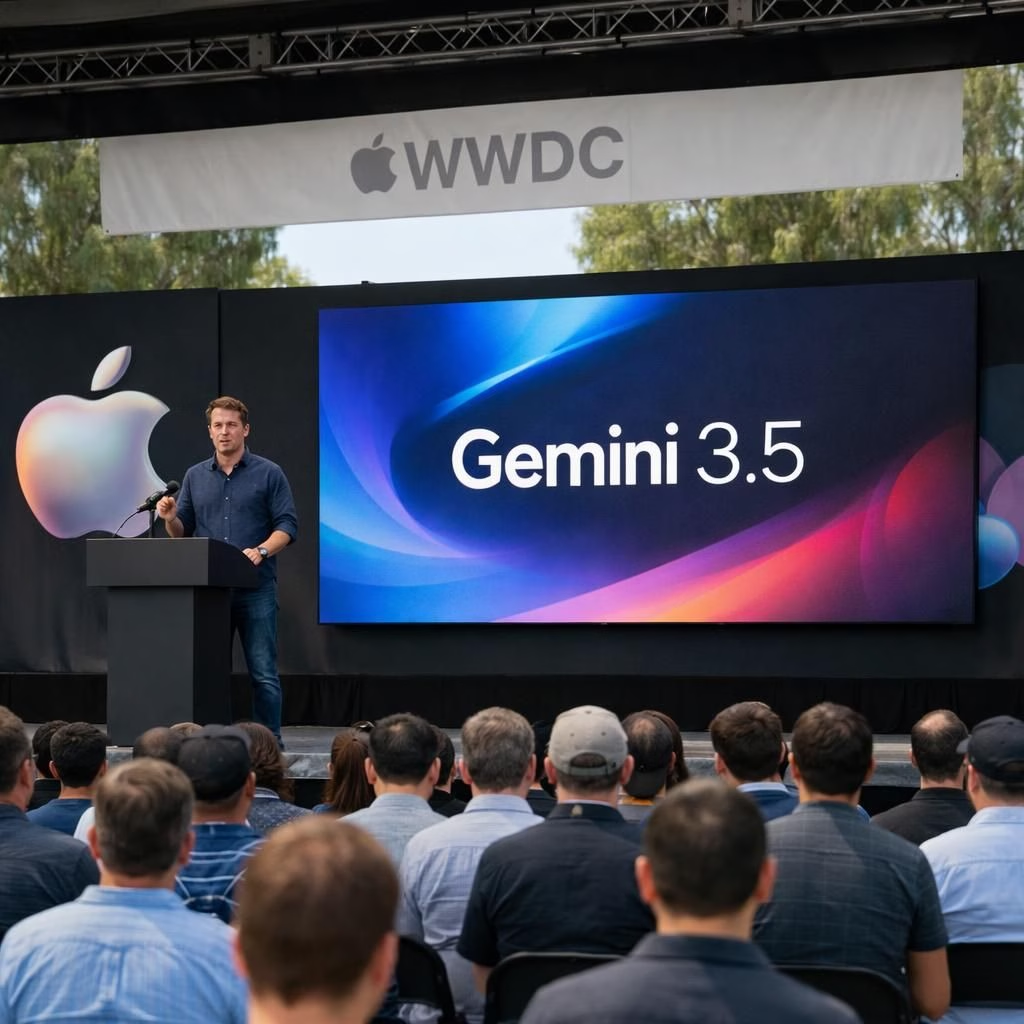
AI and Google I/O 2026 delivered a show that leaned heavily on hype, yet real value stayed offstage. Gemini 3.5 chatter filled the air, and the demos wore shiny armor but carried few boots to practical use. The audience clapped on cue, but the applause often arrived late or not at all. The stage tried to resemble a tech coronation, but the crown slipped. The conference wanted to be Apple-level stagecraft while selling the vibe of a user-centric revolution. In short, it felt like a parade where the floats lag behind the parade-goers’ expectations.
AI at Google I/O 2026: hype versus real use cases
The keynote leaned on terms like AI and Gemini 3.5 with the confidence of a TED Talk, yet practical use cases stayed cloudy.
Demonstrations showed lines of code and token counts, which sound impressive until you ask what a normal user would do next.
A sense of distance formed as the crowd asked for a bridge from capability to everyday benefit.
In some moments, Google I/O demonstrations looked flashy but lacked a clear path to daily use.
Many analysts praised the scale, but developers asked for concrete workflows instead of dashboards. Gemini 3.5 appeared in a handful of slides, with few links to email, scheduling, or search reform. The result was a wow without a compass for the average user. For some, the wait for meaningful usability felt longer than the applause.
During the talks, observers noted that Google I/O sessions sometimes overwhelmed with metrics, yet failed to connect those figures to everyday tasks.
Google I/O stagecraft meets AI ambition: user focus wins
Meanwhile, Apple’s WWDC presented a different philosophy: the stagecraft serves a clear use case, not just a mood.
The outdoor, open-air presentation at times felt more like a festival than a boardroom, but the moments that mattered landed with precision.
Apple framed features around subtle daily benefits, from smarter reminders to more reliable health prompts, and the audience felt the value in real time.
Google I/O, by contrast, tried to balance spectacle with token-rich screens and a narrative about long horizons. The result was a show that looked exciting on the surface but sometimes wandered away from concrete, applicable tasks.
Gemini 3.5 got some airtime here too, yet the messaging often circled back to capability rather than outcome. This dynamic difference is not just a stylistic choice; it affects how users perceive the technology and whether they adopt it in real life.
As a performance, Google I/O had energy and ambition. The open-air venue offered a sense of scale that Apple’s more controlled indoor sets rarely capture. Yet the more polished Apple presentations demonstrated how to translate complexity into trust. The contrast is not a matter of one company being right and the other wrong; it is a matter of taste and clarity. When you can show a practical use case—email triage, meeting summaries, or calendar smarting—people tend to listen. When the best you can do is boast about trillion-token counts, the magic wand loses its shimmer. The content and language around AI should promise help, not simply shout potential. In this light, the WWDC approach to AI—less noise, more know-how—feels more human to a broad audience.
Gemini 3.5 was positioned as a flexible engine, yet the interface and use-case examples occasionally seemed to demand a leap of faith rather than a clear path forward. There were sharp moments when the audience could imagine immediate benefits, but there were more moments when the path forward extended into an uncertain horizon. The messaging often framed AI as a monolith when, in practice, users want a toolkit that respects their context. This is not a critique of the technology; it is a reminder that adoption hinges on meaningful, repeatable outcomes. If AI is a helper, it must act like one in ordinary routines, not just in grand experiments. The best moments of Google I/O suggested what could be possible; the best moments of WWDC showed what is already useful today.
In that sense, Google I/O stagecraft and AI ambition reveal a split in how products are understood: spectacle versus practicality. The path forward will depend on how quickly developers and users turn spark into steady, everyday benefits.
Google I/O stagecraft vs AI ambition: user focus gains respect
One noticeable pattern was the pivot from “what is” to “what next?” The audience asked for prompts that align with real daily tasks and less emphasis on the sheer scale of tokens used. The emphasis on AI was unavoidable, yet the most talked-about features were those that felt usable now rather than someday.
In Apple’s playground, features arrive with a sense of calm confidence. In Google I/O, the tempo moves fast, yet the path from invention to habit remains fuzzy. The Gemini 3.5 narrative is compelling, but the success will depend on how quickly developers and users translate it into tangible steps.
The cycle of hype, demonstration, and real-world utility must tighten if AI is to escape the claptrap trap of spectacle and become genuinely helpful. The tension between ambition and accessibility is what makes these conferences interesting to watch—and somewhat instructive for buyers and builders alike.
If you enjoy a well-told story, this year’s contrast offers a lesson: stagecraft matters, but relevance matters more. A platform that feels reliable and offers clear use cases will win longer attention than a brilliantly staged show that leaves people asking, “What do I do with it right now?” The Gemini 3.5 engine might still prove valuable, but it needs a clearer bridge to everyday tasks to earn consistent trust. For now, both AI and Google I/O sit at an inflection point: the promise is powerful, the delivery must be practical, and the next wave will judge how well the hype translates into real-life wins.
Special thanks to AppleInsider for coverage that framed this discussion. The following attribution reflects the original reporting that informed this perspective: Original article attribution.
If you enjoyed this perspective, share your thoughts in the comments below. Your take on AI, Gemini 3.5, and the Google I/O 2026 experience matters to the conversation.
Practical takeaways for AI at Google I/O 2026
- Focus on concrete daily-use cases: email triage, calendar summaries, and planning prompts.
- Bridge the gap from token counts to real outcomes with clear workflows.
- Test prompts in real tasks with real data and measure usefulness, not just speed.
- Provide simple onboarding that helps users start using AI for routine chores.
FAQ about AI at Google I/O 2026
- What stood out at Google I/O 2026? Practical workflows and Gemini 3.5’s integration into daily tasks were discussed, but clarity on everyday use varied by presenter. The Verge offered one perspective on the event.
- How does this compare to Apple’s WWDC? Apple emphasized tangible use cases and trust, while Google emphasized potential and scale. Readers should watch for how quickly both ecosystems deliver usable features.
- What should users expect in real life? Realistic expectations are essential: features that simplify email, scheduling, and search should arrive with clear benefits and minimal friction.