

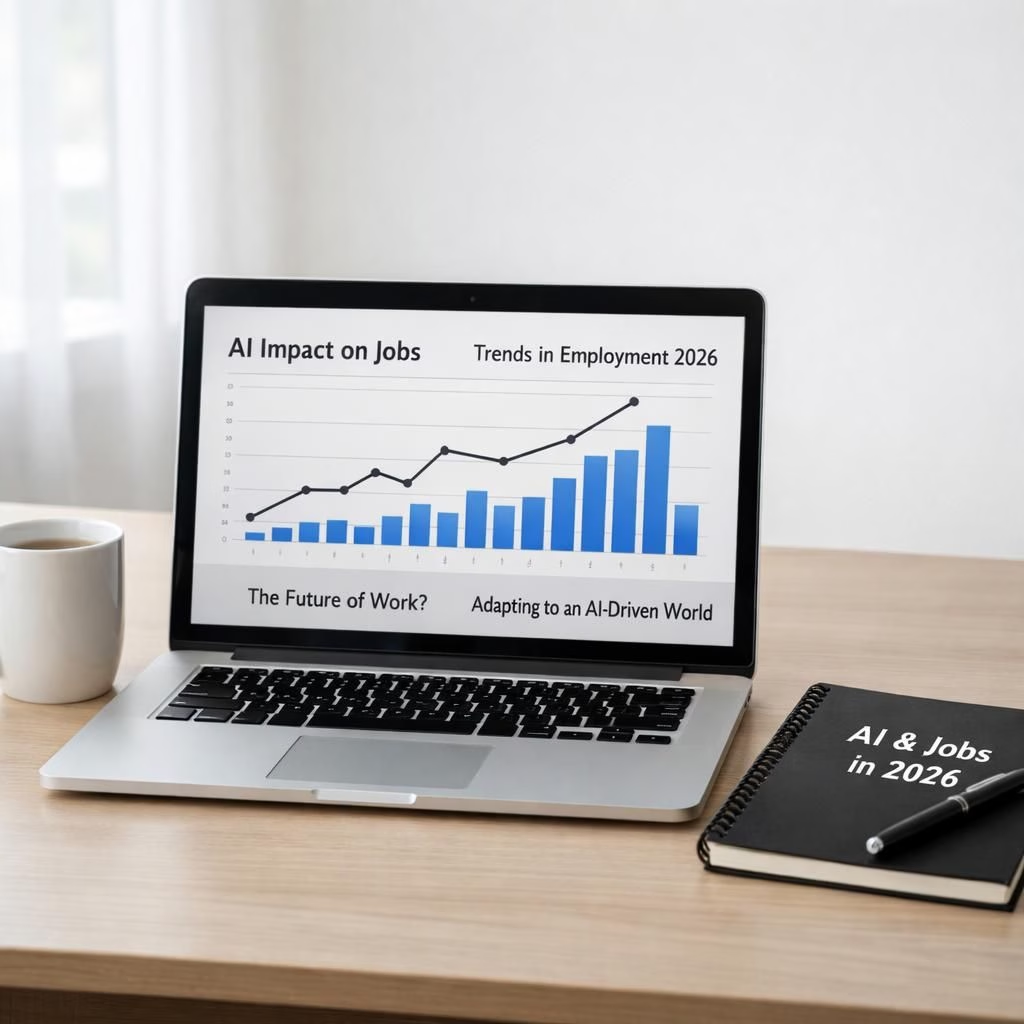
AI and employment collide on the stage of 2026, shaping headlines and boardroom debates. Marc Andreessen argues that AI is not the culprit, stressing that the real dynamics are older, broader, and more human than a quick automation story. He pins today’s employment landscape and layoffs on monetary policy and a COVID-era spree of overhiring, while workers quietly became icons on screens as offices went virtual.
AI and Employment Realities in 2026
In his view, the current layoffs are not driven by machines but by money and demand shifts. When interest rates dropped to zero during COVID, many companies loosened discipline and hired widely, thinking operations could go anywhere on a screen. Marc Andreessen notes that firms are overstaffed by roughly 25%, with some hovering near 50% or more. The bottom line is clear: AI isn’t the sole villain; payroll bloat and policy missteps created the foundation for today’s employment landscape.
AI as Narrative, Employment as Reality
From his perch, executives frame layoffs as AI-driven to avoid admitting missteps. He calls this a classic zero-sum cycle: more hiring today makes pruning tomorrow harder, and AI becomes the convenient scapegoat. The phrase silver bullet pops up in many boardroom conversations because technology sounds exciting and future-facing, even while budgets tell a different story. The message is simple: talk about AI, but measure demand, leverage, and utilization before you pull the plug.
MarcAndreessen on the “Silver Bullet” Myth
MarcAndreessen argues the “silver bullet” framing oversimplifies a messy economic reality. The real culprits are a zero-interest environment that supported bloated payrolls and the subsequent tightening that exposed employment fragility. He stresses that pointing to AI as the root cause is not only inaccurate but also a convenient narrative for those who prefer bold stories to solid accounting. If you want the takeaway, audit hiring and budget discipline before you automate the workforce.
- Audit staffing levels and align workforce with work demand, not hype about AI.
- Invest in productivity improvements rather than cutting headcount on a whim.
- Recognize that the remote-work era created new cost structures that need careful management.
- Communicate clearly with teams: layoffs should be about performance and strategy, not a tech bogeyman.
If you take away one message from this view, it’s that AI is a tool, not a cause, and the employment picture in 2026 will depend on disciplined budgeting, not magical automation. MarcAndreessen’s critique invites leaders to separate story from strategy and to focus on the fundamentals: demand, rates, and human capital alignment.
Please share your thoughts in the comments below.
Original article: Thank you to the 20VC podcast featuring MarcAndreessen for the source material. Link: 20VC Podcast.
Practical steps for aligning AI with workforce planning
- Audit staffing levels and align workforce with demand, not hype about AI.
- Invest in productivity improvements rather than cutting headcount on a whim.
- Recognize that the remote-work era created new cost structures that need careful management.
- Develop clear communication strategies: layoffs should be about performance and strategy, not a tech bogeyman.
- Track the impact of AI initiatives on output, not just headlines about automation.
Using disciplined budgeting and a sober view of AI helps keep the employment landscape resilient even as technology changes.
Frequently Asked Questions
- Is AI driving layoffs?
- Not primarily. Marc Andreessen and other critics argue that macro factors like interest rates, demand shifts, and overhiring during the COVID era provide a more complete explanation than automation alone.
- How should leaders approach employment planning alongside AI?
- Focus on aligning staffing with real demand, invest in productivity, and separate narrative from strategy. Use AI as a tool, not a scapegoat.
- What is the right way to communicate layoffs?
- Be transparent about performance, business needs, and the role of technology, rather than attributing cuts to a single technology trend.
- What macro factors matter most for future hiring?
- Monetary policy, inflation, and demand cycles shape hiring more than any single technology. A disciplined budget and workforce plan help weather shifts.
Conclusion and next steps
In short, AI is a tool, not a cause. The 2026 layoff picture hinges on disciplined budgeting, demand signals, and thoughtful human capital management. For leaders, the call is clear: separate story from strategy, measure real utilization, and plan for a sustainable path forward. If you’re calibrating your own workforce strategy, start with a good audit of demand, cash flow, and talent alignment.