

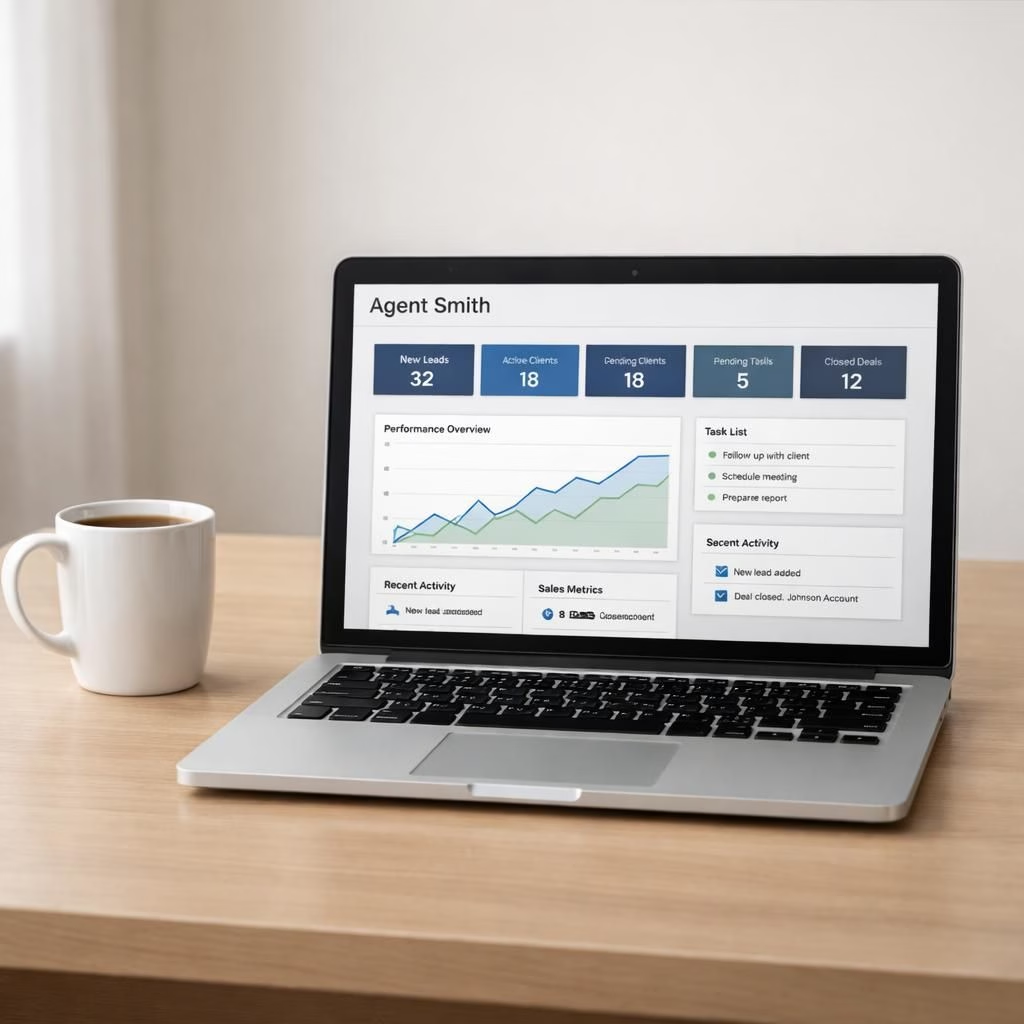
AI at Google is buzzing, and the name to watch is Agent Smith.
This tool blends fast feedback with governance, showing how curiosity tests safety on campus.
AI signals and Agent Smith adoption at scale
Inside Google, Agent Smith is not a marketing gimmick. It is an internal assistant that prototypes code queries, automates debugging, and summarizes data from confidential sources.
The demand among teams was swift, so access controls were tightened to avoid overload and study impact before a broader rollout. The tool runs behind feature flags and requires prior security reviews, mirroring how most enterprise experiments proceed. Gatekeeping isn’t a setback; it signals responsible innovation.
Initially a small group of engineers explored quick code previews, bug triage, and drafting summaries of long design documents. It interacted with internal services, produced concise notes, and fed them into sprint planning. It respected data boundaries, used anonymized data when possible, and kept logs in a closed environment to protect sensitive information. The result was faster work and a reminder that convenience must meet governance, not outrun it.
What this teaches about AI governance and Agent Smith security
From a governance perspective, the rush to share breakthroughs is tempered by guardrails. Define clear ownership, implement access gates, audit usage, and publish guidelines for data handling. For observers outside the company, the episode reads like a case study in balancing curiosity with caution. The project shows human oversight remains essential, and feedback loops matter in 2026. Agent Smith has become a touchstone for how teams balance speed with safety.
Security teams emphasize two ideas. First, access should be time-bounded and role-based, with automatic revocation when a user leaves. Second, every interaction should be logged with synthetic data where possible to protect trade secrets while enabling learning. Guardrails around Agent Smith help maintain trust as experiments scale.
As outsiders, we can translate these patterns into practical advice: start small, measure impact, and celebrate incremental wins. The phenomenon around Agent Smith shows that a useful tool sparks strong interest. The key is to keep learning, not just launching. In 2026, the best teams pair ambitious experimentation with disciplined governance and transparent communication.
If you’re enjoying this tour of AI-powered internal experiments in 2026, share your thoughts in the comments. We’re curious about what you would build and how you would guard the gates while staying creative. The conversation around Agent Smith continues to shape practical AI work.
Thanks to Business Insider for the original reporting. Original article: Business Insider – Google’s Agent Smith AI Tool.
External context: for broader AI governance perspectives, see the Google AI blog ai.googleblog.com and MIT Technology Review’s AI coverage technologyreview.com/ai.
Practical steps for teams using AI and Agent Smith
- Start with a narrowly scoped pilot (for example: quick code previews) and define clear success metrics.
- Establish governance roles and time-bound access for Agent Smith experiments.
- Document lessons, iterate on dashboards, and share findings across teams.
FAQ about AI tools and Agent Smith
- What is Agent Smith in this context? A prototype AI assistant used to prototype code queries, automate debugging, and summarize internal data.
- How is governance handled? Access is gated, logged, and subject to audits to balance speed with safety.
- Will this become widely available? The current approach favors staged rollouts with guardrails before broader use.