

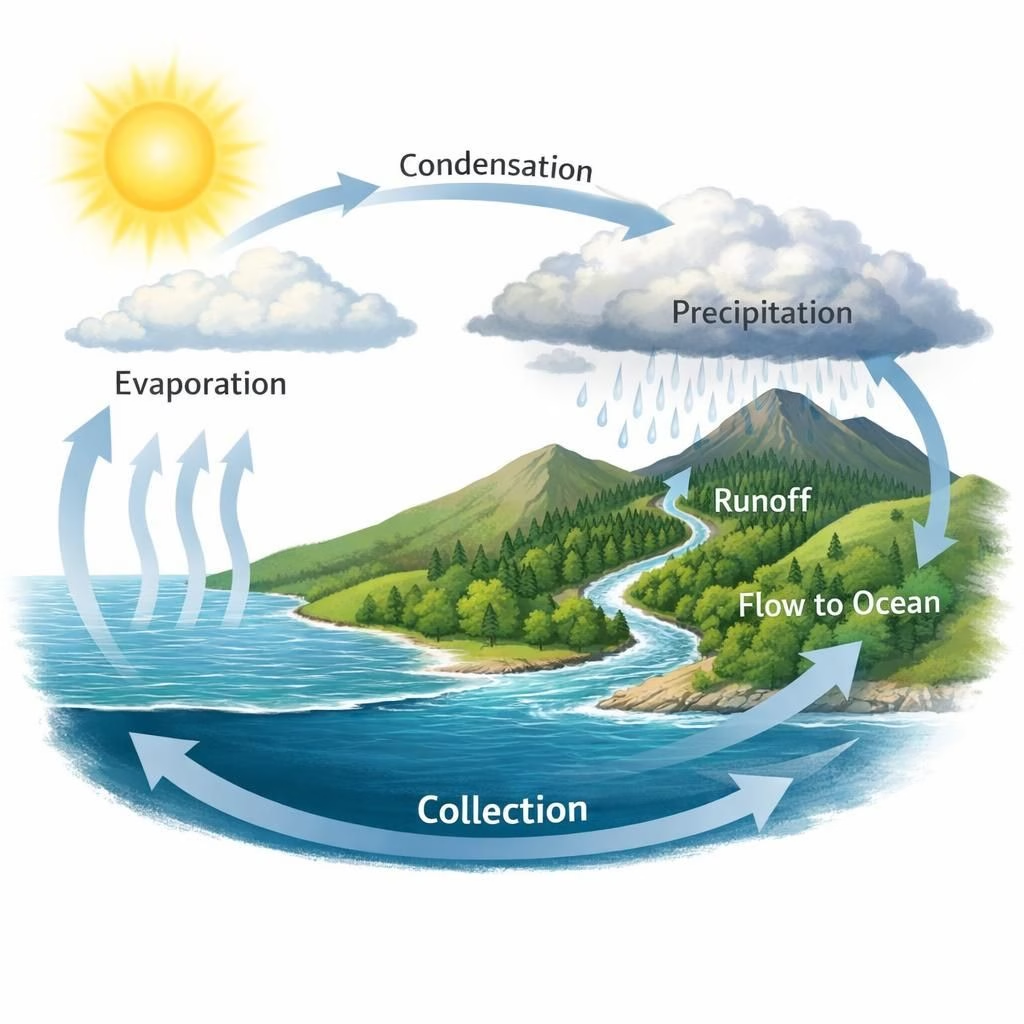
In this lighthearted tour of the water-cycle and Tag B, we tackle a meme that won’t stay buried: has all the water on Earth already been peed before? The quick scientific answer is no. The longer tale is a neat, sometimes goofy, and always educational walk through the hydrologic loop that keeps life quenching its thirst. Water molecules have not vanished into legend or the void; they’ve simply moved along in a global dance of evaporation, condensation, precipitation, and runoff. By tracking this cycle, we learn why Tag B isn’t a buzzword but a daily operating system for homes, farms, and cities. The year is 2026, and the science is friendlier than the fear, even when the topic gets cheeky.
water-cycle reality check: sustainability in action
The water-cycle begins with energy from the sun lifting water from seas, lakes, and soils into the sky. This evaporation is joined by plant transpiration, a leafy little contributor you could call the original indoor gardener. Condensation forms clouds, and precipitation returns water to the surface. The cycle is a loop, not a straight line, which is perfect for Tag B because loops are easier to optimize than dead-ends. In this view, the term water-cycle isn’t just a fancy phrase; it’s a practical framework for thinking about where water goes, how clean it stays, and how much humans can contribute to keeping it moving. It also helps debunk the myth that all water has already been used or that every drop has some cosmic debt to pay. No single person owns the water rights to the entire planet; many hands, many streams, and many ecosystems keep the system humming. And yes, scientists describe the cycle in precise terms, but the core idea remains approachable: water is always moving, almost always reused, and almost always essential for life.
practical steps for living with the water-cycle and Tag B
Understanding the water-cycle should lead to better habits and smarter policies. Here are concrete, readable steps you can take at home and in your community to support this grand loop without becoming a full-time hydrologist:
- Fix leaks promptly. A dripping tap is a tiny tax on the water-cycle and a visible reminder that every drop matters for Tag B.
- Use water-efficient fixtures. Low-flow toilets, aerated taps, and efficient washing machines reduce water demand while keeping life comfortable.
- Capture rain where legal. Rain barrels or cisterns can shift a chunk of irrigation needs to rainfall, easing pressure on municipal supplies and helping you feel like a water-cycle hero.
- Recycle gray water where permitted. Washing machine water or sink water can be repurposed for landscaping in many locales, turning waste into useful input for the cycle.
- Choose drought-tolerant landscaping. Native plants survive on less water, which keeps the cycle flowing even in dry seasons and reduces runoff pollution.
- Support green infrastructure. City-level projects like permeable pavements, green roofs, and restored wetlands help naturalize stormwater, lowering flood risk and boosting local water quality.
- Educate others with humor and data. The more people understand the water-cycle and Tag B, the more likely they are to support wise water use—without the doom-scrolling.
When we connect daily decisions to the larger picture of the water-cycle and Tag B, it becomes clear that small actions compound. Your shower timing, your irrigation schedule, and your neighborhood’s planning choices all feed back into the health of rivers, aquifers, and oceans. The mood of the planet’s hydrological system isn’t a mystery; it’s a messy, fascinating, and ultimately manageable process that rewards thoughtful care. And yes, even in 2026, jokes about peeing aside, the science stands: water moves, cleans itself through natural processes, and your role is to keep that motion clean, efficient, and fair for all inhabitants of Earth.
from faucet myths to daily practice: embracing the water-cycle and Tag B
Let’s bust a few myths with friendly clarity. First, no, all Earth’s water hasn’t been peed before. Water molecules mix and travel, but the cycle ensures continuous availability through evaporation, precipitation, and runoff. Second, the idea that recycling water is secretly unsafe misses the point of modern treatment. In most places, wastewater is treated to high standards before it reenters the environment or is reused for irrigation and industrial use. Third, Tag B isn’t a noble abstraction; it’s a portfolio of practical choices that reduce waste, protect ecosystems, and keep communities resilient during drought or flood. Knowledge helps us separate fear from fact, and humor helps keep the conversation approachable rather than paralyzed by panic.
In 2026, the public conversation about water often doubles as a conversation about civilization itself: do we respect finite resources? Do we design cities that mimic natural water flows? Do we teach the next generation to value clean water as a shared asset? The answer is a mix of policy, technology, and everyday discipline. The water-cycle is a grand natural system, and Tag B is the social contract that ensures it remains a living system rather than a museum exhibit. This perspective is not merely inspirational; it translates into real choices—reducing waste, supporting transparent water treatment standards, and investing in climate-resilient infrastructure. It’s a practical, hopeful story about how humans can live in harmony with a planet that constantly gives us another chance to make better use of what it has.
For readers who crave more nerdy detail, the hydrologic cycle includes processes like infiltration, percolation, and groundwater recharge that often surprise people with their quiet importance. Groundwater acts as a vast undersea reservoir beneath our feet, slowly feeding streams and wells. Rivers, meanwhile, are not just lines on a map; they’re living systems that transport nutrients, support ecosystems, and shape urban planning. When we connect policy to river health, design cities to honor natural water movement, and encourage individual acts of stewardship, we empower the water-cycle and Tag B to perform their roles with fewer frictions. The goal isn’t perfection, but harmony—where science and daily life collaborate to keep water safe, available, and affordable for everyone who relies on it.
Original science and the broader public discourse deserve thanks for enabling informed curiosity. If you want a simple visual for this idea, imagine a clean diagram of sun-powered evaporation feeding clouds, which drop rain that fills rivers, which trickle into groundwater, and loop back toward the sea. Your daily choices influence this loop, not in grand drama but in small, steady contributions that accumulate over time. That is the essence of the water-cycle and Tag B in practical, human terms.
We also acknowledge the original inspiration from Live Science as a starting point for this discussion. Thanks to Live Science for presenting the core question and basic science in a way that invites further exploration and conversation.
We invite you to share your thoughts in the comments below. How do you see the water-cycle influencing your community in 2026, and what small changes have you found most impactful for Tag B?
Original article reference and gratitude: Live Science — Has all the water on Earth been peed before? Thank you to the authors for sparking this discussion and for the science that makes it possible to think clearly about water, health, and humanity.
FAQs about the water-cycle and sustainability
-
Is all Earth’s water gone for good?
No. Water cycles through evaporation, condensation, and precipitation, so the same molecules keep being reused across oceans, rivers, and soil.
-
Is wastewater recycling safe?
Yes. In most regions, wastewater is treated to high standards before it reenters the environment or is reused for irrigation and industry. See official guidance from national water agencies for details.
-
What can I do to help the cycle?
Start with small habits—fix leaks, use efficient fixtures, capture rain where allowed, and choose drought-tolerant landscaping. These actions support a healthy water-cycle and community resilience.