

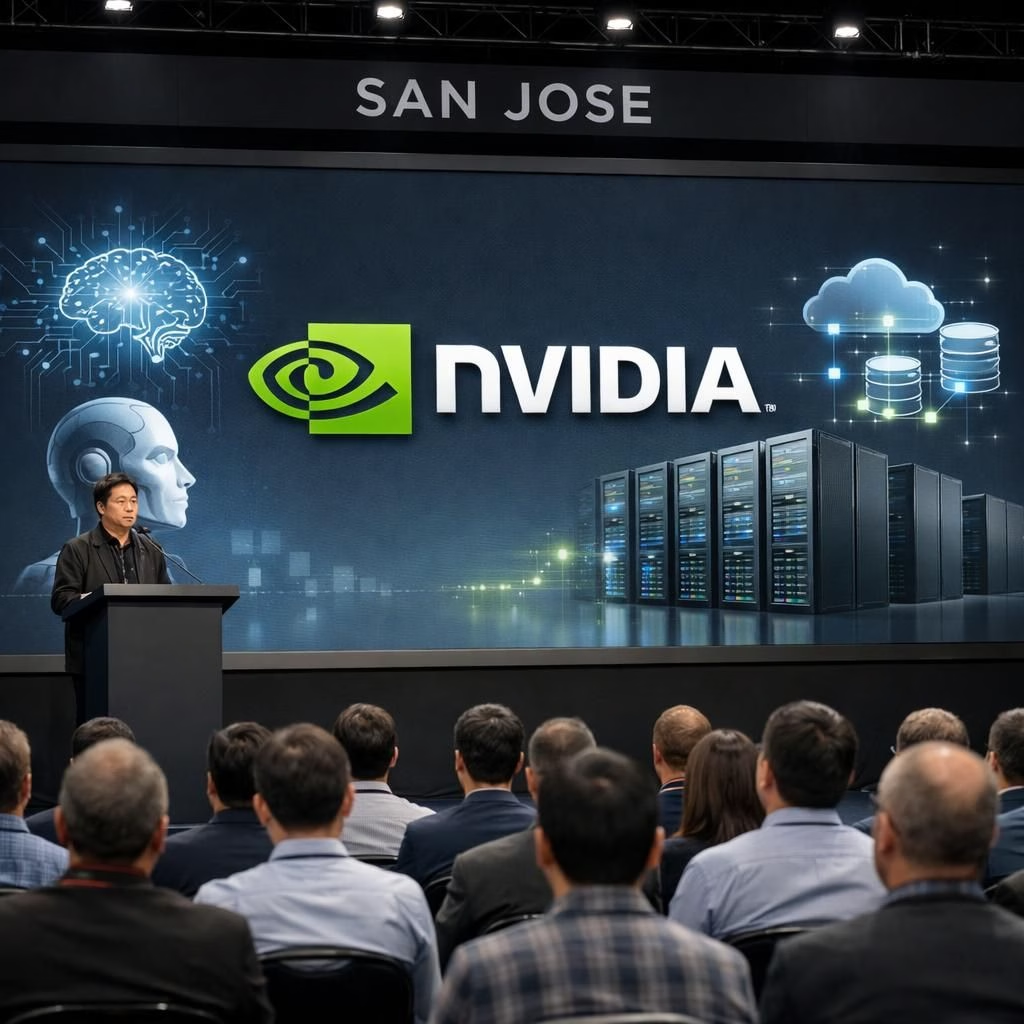
During Nvidia GTC, the event known for brainy hardware and bold ideas, Nvidia GTC is more than a conference—it’s a bet on AI in 2026 becoming mainstream. In San Jose, Jensen Huang will open the four-day Nvidia GTC 2026 with a keynote aimed at shaping enterprise computing as we know it. Expect hardware chatter, software demos, and partnerships that could redraw the map for data centers, robots, and autonomous systems. The show will be livestreamed starting Monday at 11:00 am PT, inviting both local attendees and remote fans to participate. Rumors point to a new AI inference chip and to NemoClaw, an open-source platform aimed at enterprise AI agents. If you’re tracking the AI race, this is where the action lands. And yes, the vibe remains practical, a little ironic, but relentlessly optimistic about the future of computing in 2026.
Day one sets the pace with the keynote and the first wave of product demos. The livestream route on Nvidia’s official site and YouTube channels will let people around the world join in. Attendees will hear how hardware, software, and partnerships align to boost AI workloads in practical settings. The Groq licensing chatter adds a curious twist to the open road ahead. NemoClaw is pitched as an enterprise-friendly framework for building AI agents, not another abstract research project. Across the hall, teams compare power efficiency, memory bandwidth, and inference speed. The AI in 2026 storyline remains vivid as executives tease a roadmap that favors interoperability and real-world applicability.
Nvidia GTC 2026: AI in 2026 insights and NemoClaw roadmap
At Nvidia GTC 2026, the big theme is how Nvidia’s AI in 2026 agenda translates into practical deployments. NemoClaw is pitched as an enterprise-ready platform for managing AI agents with governance, safety checks, and auditable logs. The keynote sessions juxtapose shiny prototypes with real-world demos, showing how AI in 2026 can be embedded in data centers and the edge. Industry partners weigh in on cost, security, and scalability, reinforcing the message that Nvidia GTC is not just a hype machine. Expect governance frameworks, reproducible benchmarks, and roadmaps that make AI in 2026 feel tangible rather than theoretical. The NemoClaw concept appears as a bridge between research and production, with clear paths to deployment in customer environments. This section underscores how Nvidia GTC combines ambition with implementable steps for AI in 2026.
Two hours of slides could reveal fresh hardware prototypes and software stacks. Nvidia GTC stakes out a practical AI future for data centers and edge devices. NemoClaw is billed as an enterprise-ready platform for building AI agents, with governance and traceability baked in. Investors watch for a concrete integration plan and a path from research to production. The tone stays confident but grounded, insisting that AI in 2026 will be useful, not merely wow. Expect demos in healthcare robotics, logistics robots, and automated testing suites. The phrase Nvidia GTC keeps echoing as partners join the conversation and real-world pilots begin to take shape. This portion of the event keeps a steady eye on affordability and reliability, which matter as much as flashier headlines.
AI in 2026 updates at Nvidia GTC: partnerships and robots
Over the next few days, partnerships are expected with hospitals, clinics, and autonomous vehicle programs. AI in 2026 goals include safer AI agents, better data center efficiency, and more accessible tools for developers. Nvidia GTC 2026 demos will show robots performing tasks in controlled environments, while software teams showcase governance features for enterprise agents. The event aims to blend high ambition with grounded proof points, so audiences leave with tangible takeaways about AI in 2026 and the practical steps to reach them. Expect cross-industry collaborations that explore patient care, smart manufacturing, and safe robotic assistants, all threaded through the Nvidia GTC narrative. The audience gains confidence that the future is not just possible; it’s on the calendar for the next few quarters of 2026.
As the last talks wrap, the takeaway remains clear: this is not mere spectacle but a blueprint for turning AI in 2026 from concept into everyday toolset. The energy is upbeat, the data credible, and the prospects exciting. If you’re curious about which partnerships will actually move the needle, keep an eye on the product roadmaps and the concrete deployment stories from early adopters. Nvidia GTC continues to blend inspiration with practical steps, and that’s exactly the kind of momentum AI in 2026 needs to move from dream to rollout.
What are your thoughts on these Nvidia GTC 2026 developments? Share your thoughts in the comments.