

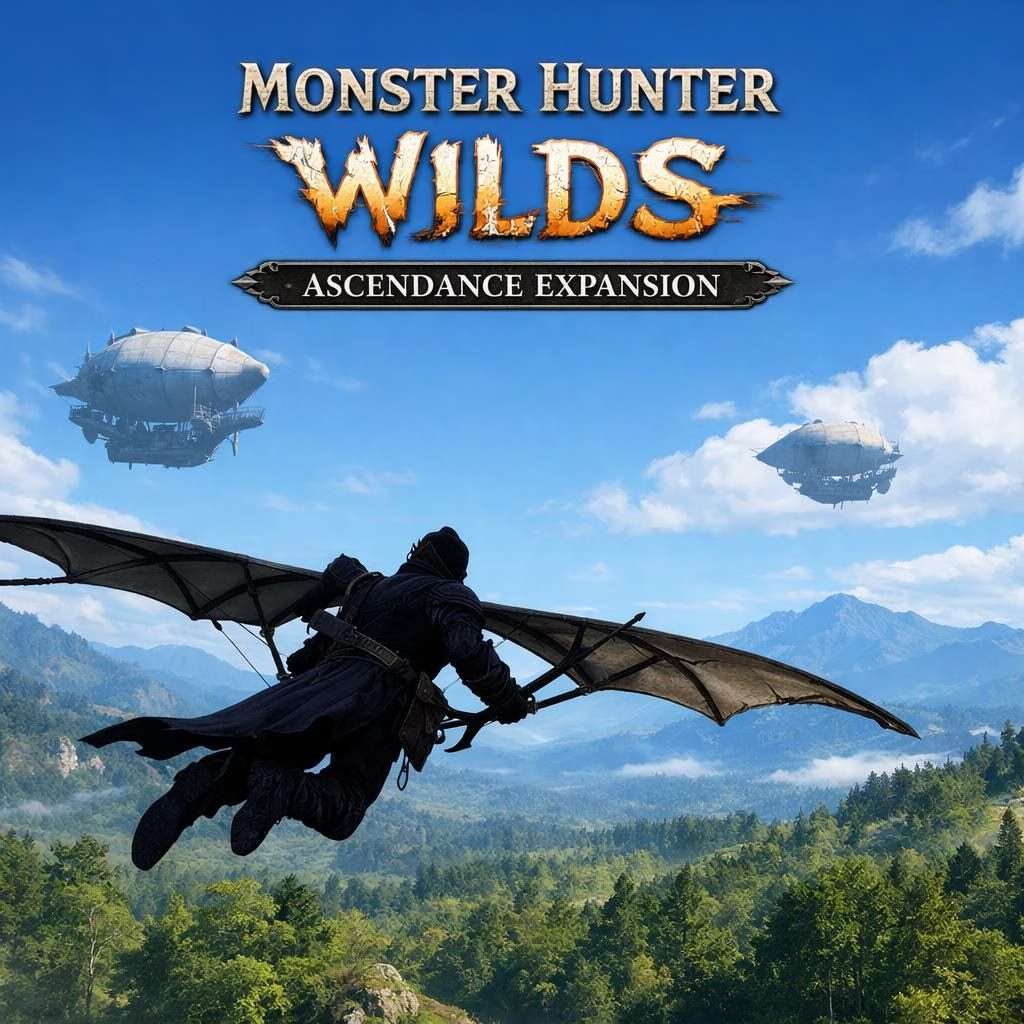
In this look at Monster Hunter Wilds and Ascendance Expansion, we balance big promises with practical detail. The skyward DLC arrives with a mix of familiar hunts and fresh systems, and the tone stays hopeful without tipping into hype. The article behind the buzz signals a thoughtful upgrade path rather than a simple rebrand, which is exactly the kind of positivity readers appreciate in 2026. Expect a blend of updated combat, new routes, and smarter loot distribution that respects players who stuck with the game through patches and balance changes.
Monster Hunter Wilds: Skyward Return
The first standout is how Monster Hunter Wilds welcomes players back into a skyward orbit. The environmental design leans into vertical combat, letting you ride thermal currents to reach higher ground and strike from unexpected angles. This is not a mere cosmetic shift; it changes how you approach hunts, with new routes and shorter fatigue cycles when you traverse the map. Expect new monsters that maneuver with windborne grace, which in turn pushes builders to rethink loadouts and palico support. The result feels like a natural evolution rather than a forced gimmick, a rare win for large-scale DLCs.
- Vertical mobility changes combat pacing
- New wind-adapted monsters
- Rebalanced fatigue and traversal
- Updated palico and loadout options
In practice, the skyward sections reward patience and planning. You’ll unlock glider-assisted chases that require precise timing and enemy anticipation. The Ascendance Expansion ties into this by layering new stamina management and environmental hazards, making you read weather like a pro. The systems are intricate but presented clearly, so players can jump in without hunting through long manuals. This is a DLC that respects your time while offering meaningful new tactics to master.
One sneaky but welcome improvement is how quest design nudges you toward exploration rather than grinding for rewards. The Monster Hunter Wilds environment feels alive, with ecosystems that respond to your actions. The air is not just a backdrop but a dynamic element that shapes the hunt. You’ll notice small details—the way wind shifts the path of a beast, or how a cliffside route opens up after you complete a specific objective. These touches create a sense of discovery that complements the big battles and epic boss fights.
For players who enjoy content cadence, the Skyward Return makes early progress feel satisfying. You’ll unlock bite-sized aerial challenges that feed into larger hunts without stalling progression. The pacing is deliberate, and that matters when you’re balancing a patchy schedule with demanding quests. The result is a DLC that respects the player’s time while still delivering a sense of accomplishment and discovery. The Ascendance Expansion threads neatly through these experiences, offering new weapons, move sets, and synergies that feel earned rather than tacked on.
Ascendance Expansion: Horizon-Opening Features
The second pillar of this rewrite is Ascendance Expansion, which emphasizes horizon-expanding play styles. The new systems are not just about bigger numbers; they’re about smarter tactics and more varied encounters. You’ll see enhanced crafting options, deeper skill trees, and gear that feels tailored to aerial combat and terrain-aware hunting. The approach is to widen the player’s toolkit without overwhelming them with options. It’s a careful balance that keeps the experience accessible for newcomers while still rewarding veterans who chase mastery.
Platform availability remains a practical concern, and the Ascendance Expansion appears to support multiple pathways for different player communities. The expansion works across PC and console ecosystems, ensuring cross-pollination of ideas and strategies. The design team has aimed for a consistent feel across play styles, so a solo diver, a duo duo, or a full squad can coordinate in meaningful ways. The Ascendance Expansion adds not just new tools, but a broader sense of possibility—like being handed a new continent to explore without losing your familiar map.
From a systems perspective, the Ascendance Expansion leans into adaptive difficulty and smarter resource management. Monsters scale in a way that respects your skill progression, while loot drops align with the tactics you employed in the hunt. Those choices matter: you’ll see a tighter feedback loop that rewards experimentation and risk-taking. If you enjoyed the core loop before, you’ll find a renewed sense of agency with the new mechanics, plus a handful of quality-of-life tweaks that shave off busywork without removing challenge.
Another highlight is the improved co-op design. With the Ascendance Expansion, teams can coordinate aerial flanks and synchronized feints more effectively. Communication tools feel sharper, and the HUD presents critical data with minimal clutter. It’s a minor miracle that the design remains readable during intense boss phases while you’re juggling wind currents and cliff ledges. This is the kind of polish that elevates a DLC from good to genuinely memorable.
As you step back to assess the big picture, the synergy between Monster Hunter Wilds and the Ascendance Expansion becomes clear. The sky-focused pacing, combined with expanded skill sets and gear options, creates a cohesive arc rather than a disjointed bundle of features. You’ll notice that this is less about the loudest new gimmicks and more about integrating thoughtful improvements into the game’s rhythm. The result is a DLC that feels like a coherent evolution, not a separate spin-off.
From a meta perspective, fans have reason to be optimistic about ongoing support. If 2026 brings additional patches and event rotations, the Ascendance Expansion could sustain long-term engagement. The combination of new aerial combat options and refined progression paths offers both novelty and lasting value. That balance is exactly what communities look for when they debate the next big DLC drop and weigh it against existing content that still shines after months of play.
All told, this update preserves the core identity of Monster Hunter Wilds while offering a meaningful expansion through the Ascendance Expansion. The result is a more dynamic hunting experience, richer exploration, and a stronger sense that Capcom is listening to its players. The mix of aerial combat, upgraded gear, and smarter quest design invites both curious newcomers and seasoned hunters to re-engage with the world in fresh ways. If you enjoy the franchise’s blend of strategy and spectacle, you’ll likely find the skyward push worth your time and attention in 2026.
Source and gratitude go to the original reporting that helped shape this overview. Original coverage drew on Kotaku, Game Informer, Nintendo Everything, Wccftech, and Windows Central. A special thanks to Kotaku for the core material that inspired this rewrite.
Source attribution: Kotaku — original reporting; thank you for the thoughtful material that sparked this rewrite.
Have thoughts or questions about the Monster Hunter Wilds and Ascendance Expansion coverage? Share your impressions in the comments below and join the conversation!
External context
- Capcom – official Monster Hunter hub
- Game Informer coverage and context