

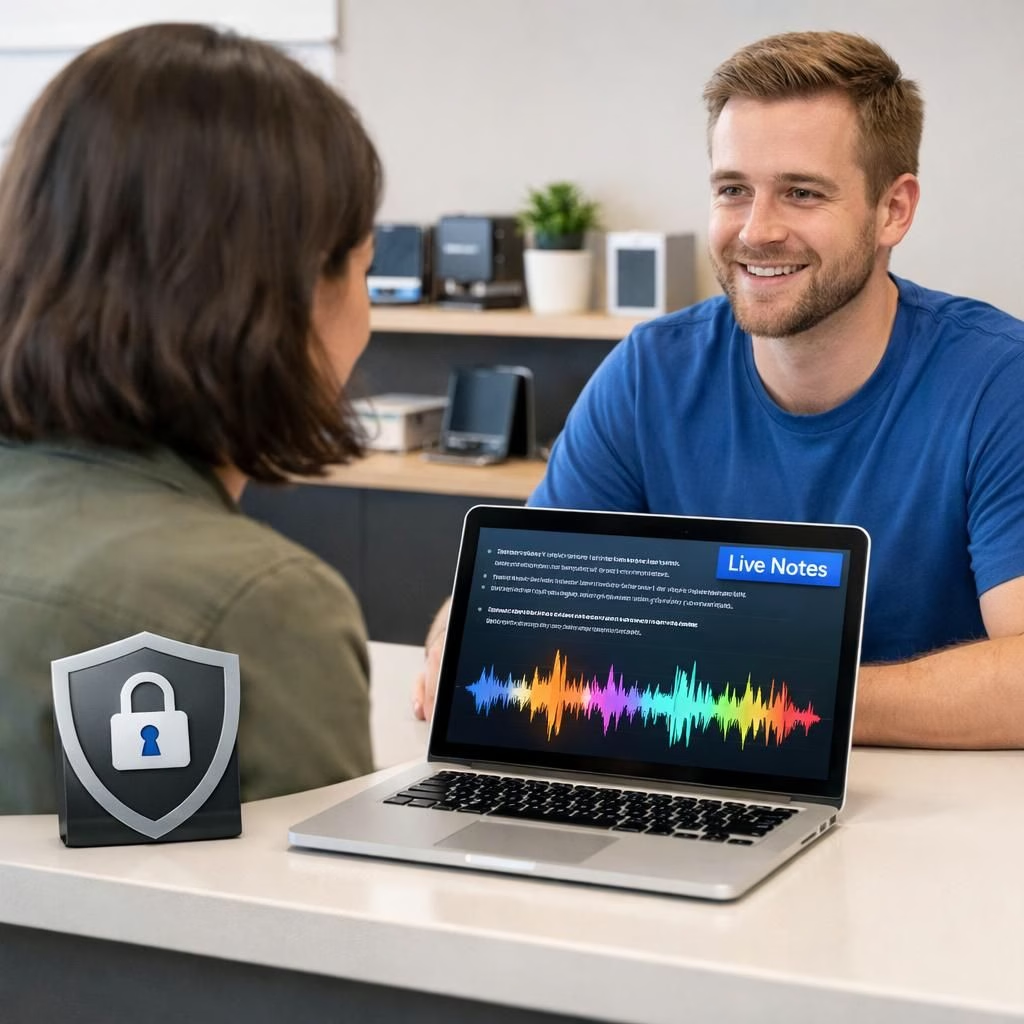
Live Notes promises to lighten the Genius Bar’s workload by auto-recording and summarizing conversations, all while protecting privacy for customers and staff. In 2026, Apple reportedly piloted a system that records and autotranscribes conversations, then summarizes them into a record of the repair session on the employee’s work iPad. The aim is to speed things up, not to turn store floors into a surveillance theater. The program, discussed in hushed-but-excited tones as Live Notes, is currently limited to a handful of stores and remains optional for all participants. Apple asserts the audio is not saved beyond the session, that only voluntary participation ensures consent from both sides, and that managers won’t casually skim transcripts. Still, the whiff of a monitoring tool lingers, and the skepticism is healthy: technology loves to promise convenience and often delivers a nudge toward accountability. The upshot: a service call could become a living, evolving knowledge base, with the transcript acting like a polite magpie that quotes what happened and what was learned.
Live Notes and privacy in the workplace: what this 2026 pilot means
The core idea is simple: record the exchange, generate a concise summary, and store it so techs can follow up with better answers next time. The pilot aims to save staff time and improve consistency, not to replace human judgment with a machine verdict. privacy opt‑in is provided for both sides, and the customer consent line remains visible at the point of service. When done well, this approach turns a repair visit into a tiny, living knowledge base rather than a one-off memory. The result should be quicker fixes, happier customers, and less repeating yourself about the same steps over and over.
Live Notes and privacy in 2026: balancing transparency with trust
Still, workers worry that transcripts could be used to rate performance, compare one tech against another, or shrink the space for open conversation. The smartest move is to treat Live Notes as a collaborative tool, not a scoreboard. If the system records insights with consent, then stores only the minimum necessary data, and restricts access to relevant managers, the tool stays helpful instead of haunting the staff. Tim Cook once framed privacy as a fundamental human right, and while 2018 is a long time ago in tech years, that sentiment still feels relevant. The 2019 Siri inquiry drama showed that even big players stumble, but it also taught a practical lesson: people respond to clear rules and transparent incentives more than to punitive secrecy.
Gurman notes that Live Notes is an early test, a stage in a broader trend toward more mindful monitoring in tech shops. The point is not to criminalize helpful conversations, but to capture actionable lessons in a way that respects both sides of the counter. If the pilot moves from a secretive impression to a well‑communicated policy, the benefits could include faster repairs, better follow-up, and a smoother customer journey. The challenge remains: build trust, not a wall of data that nobody reads aloud.
What could a balanced approach look like? A practical plan would include clear opt‑in for customers and staff, strict data minimization, short retention windows, and role‑based access so only the right eyes see the right notes. The summaries should be transparent enough to share with the customer, with redaction options for sensitive details, and a feedback loop so employees can request corrections. When teams can view the narrative of a repair without the fear of being judged by a silent transcript, both care and craftsmanship improve.
If you want to keep the spirit of Live Notes without losing sight of privacy, think small, local, and humane: keep the feature opt-in, let staff tailor what gets summarized, and provide a plain-language explanation of how data is used. In practice, this is less about big brother and more about a well‑curated knowledge pool that helps everyone get better at what they do. The future of customer service could be friendlier, faster, and more consistent if we treat transcripts like coaching notes rather than verdicts.
Original article: Thanks to Bloomberg for the reporting on Live Notes at the Genius Bar. Source: Bloomberg.
We invite you to share your thoughts in the comments below.
A practical plan for Live Notes
- Clear opt‑in for customers and staff, with explicit consent and straightforward withdrawal.
- Strict data minimization: capture only what’s needed to assist the repair and optional follow‑ups.
- Short retention windows so notes don’t linger longer than useful.
- Role‑based access so only the relevant team leaders can view notes.
- Transparent summaries with redaction options for sensitive details; a customer-friendly version should be possible.
- A feedback loop so employees can request corrections or flag concerns about data use.
Live Notes could help technicians build a living knowledge base, making future visits faster and more consistent.
References
- Gizmodo: Apple has reportedly started recording and AI-summarizing conversations at the Genius Bar
- Apple Privacy
- Bloomberg coverage on Live Notes