

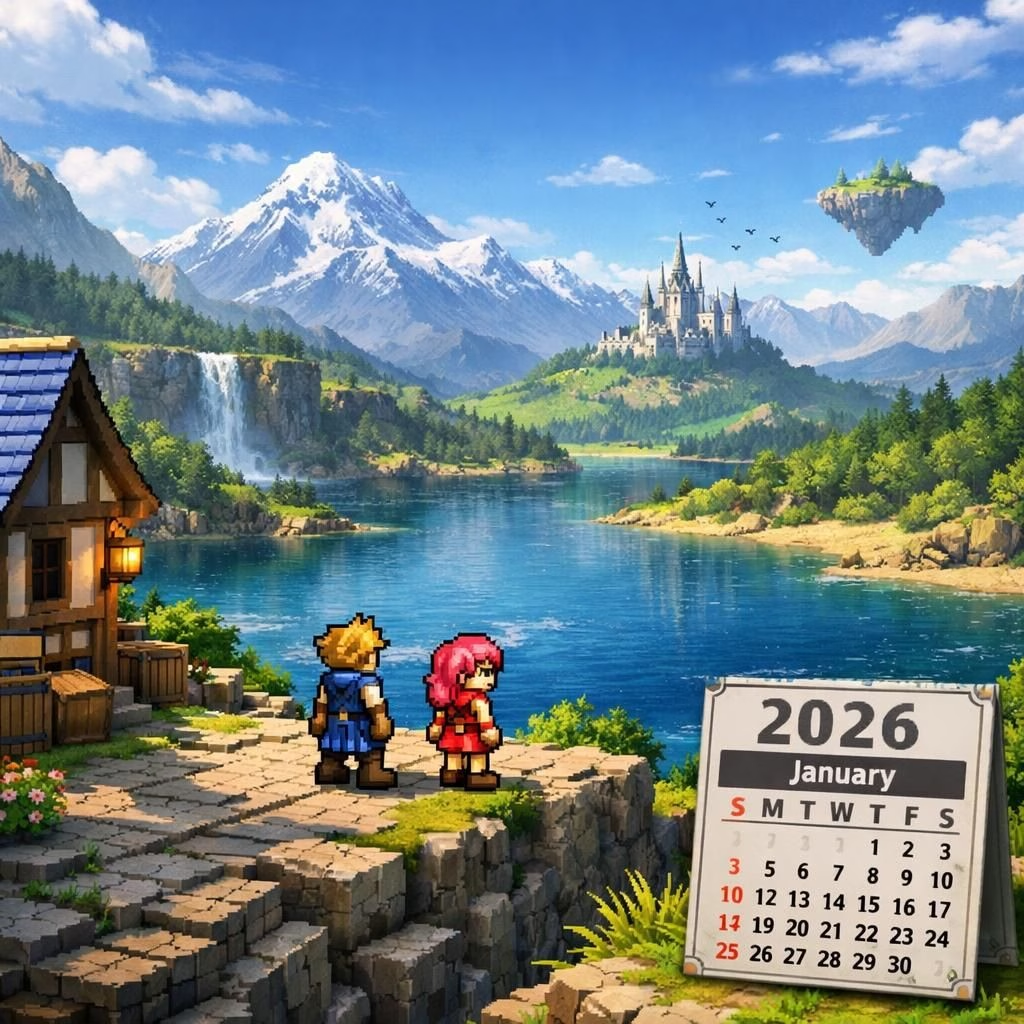
In the world of HD-2D Final Fantasy Resonance, developers trace their spark back to Final Fantasy V, and the timeline of inspiration stretches 6-7 years into the past. The project aims to bridge the charm of retro spritework with the clarity of contemporary art direction. It is a careful blend: nostalgia hits, new features land, and design stays practical—this is not a museum piece but a living reboot. The interviews emphasize that HD-2D isn’t a gimmick; it’s a deliberate aesthetic lane that supports modern systems while paying homage to the 1990s turn-based rhythm. Fans who once dismissed retro chic as cosplay will find this approach refreshingly serious with a wink.
From IGN previews to Windows Central impressions, early coverage sketches a clear line: Final Fantasy Resonance fills a turn-based void without abandoning soul. The team explains that FFBE’s success didn’t trap them; instead, it inspired a rebirth with a reworked story, a smarter world map, and enough changes to feel like a new game yet still wear the familiar armor. The result aims to keep the franchise reachable for longtime fans and inviting for players discovering Final Fantasy in 2026. In practice, that means streamlined menus, more intuitive cooldown management, and a cinematic sensibility that doesn’t slam the brakes on tactical thinking.
HD-2D Renaissance: Final Fantasy V Roots Reimagined
HD-2D isn’t a gimmick; it’s a lens. The art team treats pixel silhouettes like living characters, layering lighting, depth, and weather to create scenes that pop on a modern screen while staying faithful to the original mood. The Final Fantasy V influence appears in job systems, class synergies, and multi-step maps, but the presentation avoids clumsy nostalgia bait. The goal is readability and pace: a battle sequence feels purposeful, a dungeon puzzle feels earned, and a boss fight gives you a moment to savor tactics rather than skip through menus. The interview notes that this fusion invites both speedrunners and explorers to experiment with builds, routes, and strategies.
That careful fusion translates into a game that respects tradition while inviting experimentation. The HD-2D visuals provide clarity without washing out personality, and the job-system echoes classic Final Fantasy design sensibilities in fresh ways. The result is a tempo that rewards planning as much as intuition, making exploration feel earned rather than incidental.
Final Fantasy Resonance: A Bold HD-2D Rebirth
Early hands-on talk points to a game that respects tradition while embracing modern comfort. The combat loop remains turn-based, but the timing windows tighten, the enemy telegraphs clearer, and the reward cadence adapts to player skill. The world map receives a thoughtful refresh: zones connect more logically, fast travel becomes sensible, and hidden paths reward curiosity without turning exploration into a scavenger hunt. The reworked story threads push character arcs forward with modern pacing. The result is a revival that feels earned, not engineered for viral clips. The Final Fantasy Resonance aesthetic gives the game a crisp, readable silhouette that scales from handheld to big screen and makes each sprite feel important.
Visuals are not merely pretty; they are purposeful. They are used to support storytelling, not to distract. The directors stress that performance is a priority, with frame pacing tuned to keep action crisp in both handheld sessions and couch co-op moments. Across the interview circuit, the consensus is that Final Fantasy Resonance uses HD-2D to enhance storytelling, not to hide scenery behind a glossy veneer.
The audience anticipation grows as trailers roll out alongside new previews for Kingdom Hearts IV and more. The cross-pollination of Square Enix’s brand invites curious fans to sample the vibe, compare with classic Final Fantasy V, and imagine how the job system could evolve in a near-future release window. The careful reboot approach suggests a longer runway for polishing, localization, and accessibility options. In short, the game positions itself as a respectful nod to history that refuses to stagnate. If you loved the old tales, you may love the new rhythm of Final Fantasy Resonance—HD-2D by design, 2026 by plan.
Original reporting and inspiration come from IGN, Windows Central, AUTOMATON, and Square Enix Press Hub. Thank you to these outlets for their coverage. Read more at IGN coverage, and explore additional perspectives through Windows Central and AUTOMATON as cited above.
We invite you to share your thoughts below and join the conversation about HD-2D Final Fantasy Resonance. Your insights help shape the fan community in 2026 and beyond.
Practical takeaways for players
- Combat remains turn-based but with tighter timing and clearer enemy telegraphs, aligning with modern rhythms while honoring Final Fantasy traditions.
- The world map emphasizes logical connections and meaningful fast travel to encourage exploration without overwhelming players.
- Character arcs receive modern pacing, balancing nostalgia with fresh opportunities to grow your party’s synergies.
- Accessibility options and localization commitments aim to welcome new audiences into the Final Fantasy universe.
FAQ
- What is HD-2D Resonance? It is a Final Fantasy project framed in an HD-2D aesthetic, blending retro charm with current technology and design sensibilities.
- When is the game releasing? The plan targets a 2026 window, with polishing and localization efforts continuing through the year.
- How does the job system relate to classic Final Fantasy titles? It expands on familiar classes and synergies, while adopting a more readable, skill-based progression.
- Will it be accessible to newcomers? Yes—localization, UI simplifications, and gradual difficulty adjustments are part of the strategy.
- Where can I read more? Start with the IGN interview and then explore Windows Central and AUTOMATON for broader coverage.
Conclusion
HD-2D Final Fantasy Resonance positions itself as a respectful nod to history with a clear plan for 2026. It aims to satisfy long-time fans who crave tradition and to invite new players curious about a modern JRPG rhythm. The result is a confident rebirth that treats its roots with care and its future with intent. For readers who love the Final Fantasy lineage, this approach offers a thoughtful, non-flashy path forward that still feels vibrant and living.