

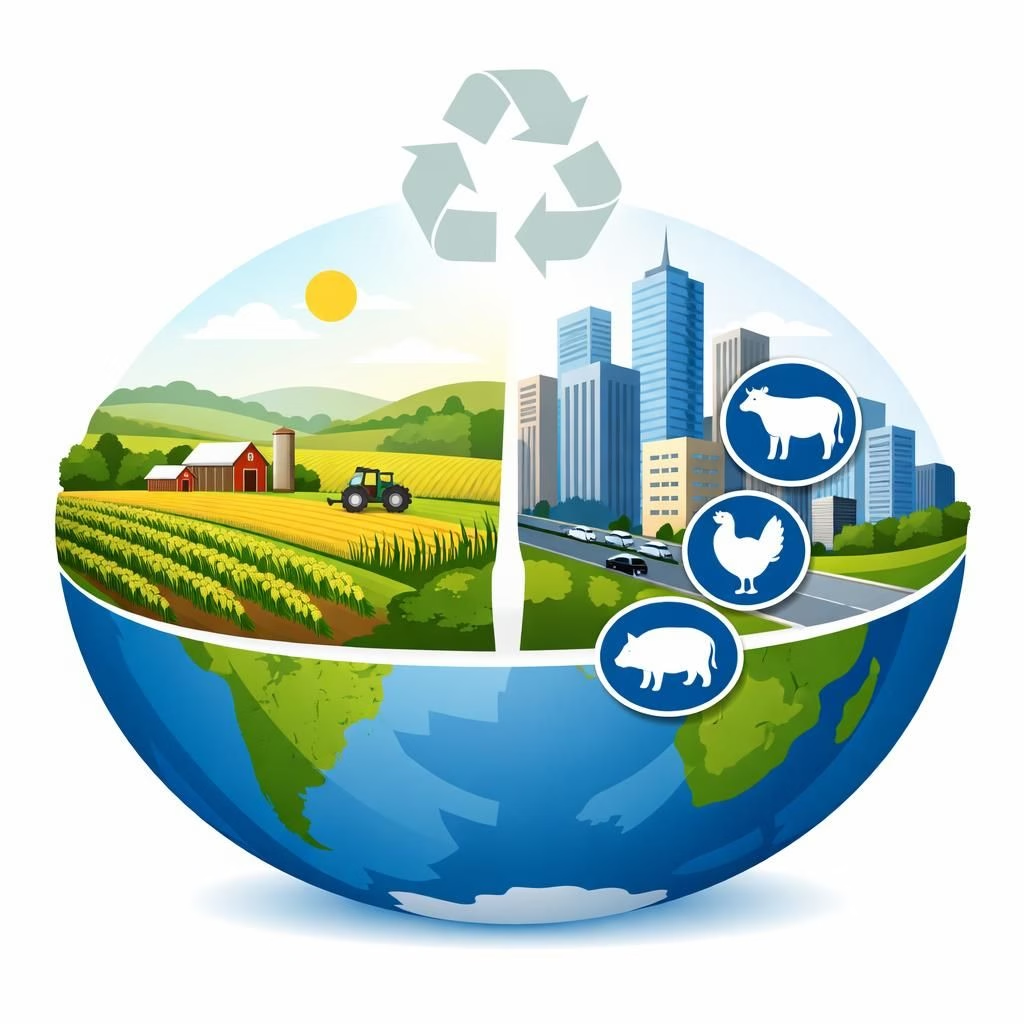
A playful, evidence-based look at how Food Systems and Healthy Diets could reshape farming and land use by 2050, with policy twists for health and the planet.
Food Systems: A reshaped landscape
Behind the headline numbers, researchers from the London School of Hygiene & Tropical Medicine (LSHTM), Cornell University, and ten modeling teams explored scenarios to see what might happen if the world pursued a global diet shift, higher farm productivity, and a halving of waste. The result is not a fixed prophecy but a practical map of plausible futures that invites policy-makers to choose among levers rather than excuses.
In the model family, Food Systems would trim land use by up to 6 percent by 2050 while lowering the worldwide value of livestock production by about 42 percent (roughly $630 billion) versus 2020. The headline is dramatic, but the logic is simple: more efficient crops, less waste, and smarter animal farming free up land and funds for better health and biodiversity.
The largest effects would hit the livestock sector. By 2050, the value of ruminant production could fall by about 70 percent (roughly $274 billion), leaving the world with far fewer beef cattle, sheep, and goats than in 2020. Yet plant-based agriculture would flourish; the global value of vegetables, fruits, nuts, and legumes could rise by around 57 percent (nearly $890 billion).
Healthy Diets: The consumer lever
These shifts hinge on a broad cultural and economic transition toward Healthy Diets that would reduce demand for resource-intensive livestock and amplify the appeal of crops and legumes. The study notes that the 2025 EAT-Lancet Commission envisioned a healthier, more sustainable global palate, and this analysis treats that vision as a scenario rather than a guarantee.
In the policy arena, Healthy Diets would help curb agricultural emissions linked to land use, with agriculture-related net CO2 emissions from land use falling by as much as 85 percent by 2050 versus 2020. Reducing the amount of land converted for farming preserves ecosystems and helps keep carbon stored in soil and forests while feeding a healthier population.
Regional differences would still dominate. The United States could see total agricultural production value decline by roughly 21 percent by 2050, but crop production value could rise about 20 percent while livestock drops by about 73 percent. India could experience a very different arc, with overall agricultural value up about 46 percent, crops up 65 percent, and livestock down about 8 percent. Across Europe, total agricultural value could fall around 35 percent, with crops down and livestock most deeply affected. These contrasts remind us that a single global nutrition blueprint cannot fit all, and policy must tailor support for farmers and communities most at risk.
Two important caveats accompany the vision. First, the study models scenarios and assumes a costless consumer shift toward Healthy Diets, which is unlikely in reality. Second, the researchers caution that markets, prices, technology, and culture will shape outcomes in unpredictable ways. Still, the core message stands: deliberate actions now could steer the world toward healthier diets, better farming practices, and significantly less waste.
Policy implications are loud and clear. Governments should begin ambitious reforms today to shield vulnerable producers and consumers as Food Systems transition and as Healthy Diets gain traction. The authors urge foresight planning, stakeholder engagement, and a willingness to confront entrenched interests that profit from a status quo that harms people and the planet.
Reference: the Nature study, “Food systems transformation would reshape global agriculture,” with a long list of authors including Matt Gibson, Marina Sundiang, and Daniel Mason-D’Croz, published in 2026. This piece is inspired by that work and aims to translate its technical content into readable insight for a broad audience. Thanks to Nature for the original article and the researchers who mapped this possible future. Original: Food systems transformation would reshape global agriculture.
Want to discuss the implications? Please share your thoughts in the comments below. And if you know someone who would appreciate this analysis, feel free to pass it along.
Practical steps for policymakers
- Invest in crop diversification and resilient farming practices that reduce land needs.
- Support farmers through transitional policies as demand shifts toward Healthy Diets staples.
- Expand programs that cut food waste at every stage from farm to table.
- Align fiscal incentives with health and environmental goals, phasing out subsidies that encourage overgrazing or monocultures.
FAQ
- What does this mean for farmers?
- Some may pivot from livestock to crop production or value-added crops, while others may need targeted support during the transition.
- Are these changes realistic?
- They represent scenarios that highlight challenges and opportunities; real-world outcomes depend on policy, price signals, and technology.
- How can governments help vulnerable communities?
- Invest in safety nets, training, and access to markets, while fostering innovations that boost yields without expanding land use.
References
- Food systems transformation would reshape global agriculture (Nature, 2026).
- Original source: https://scitechdaily.com/healthier-eating-could-trigger-a-630-billion-farming-shake-up/
- Healthy Diets – WHO
- FAO: Food loss and waste