

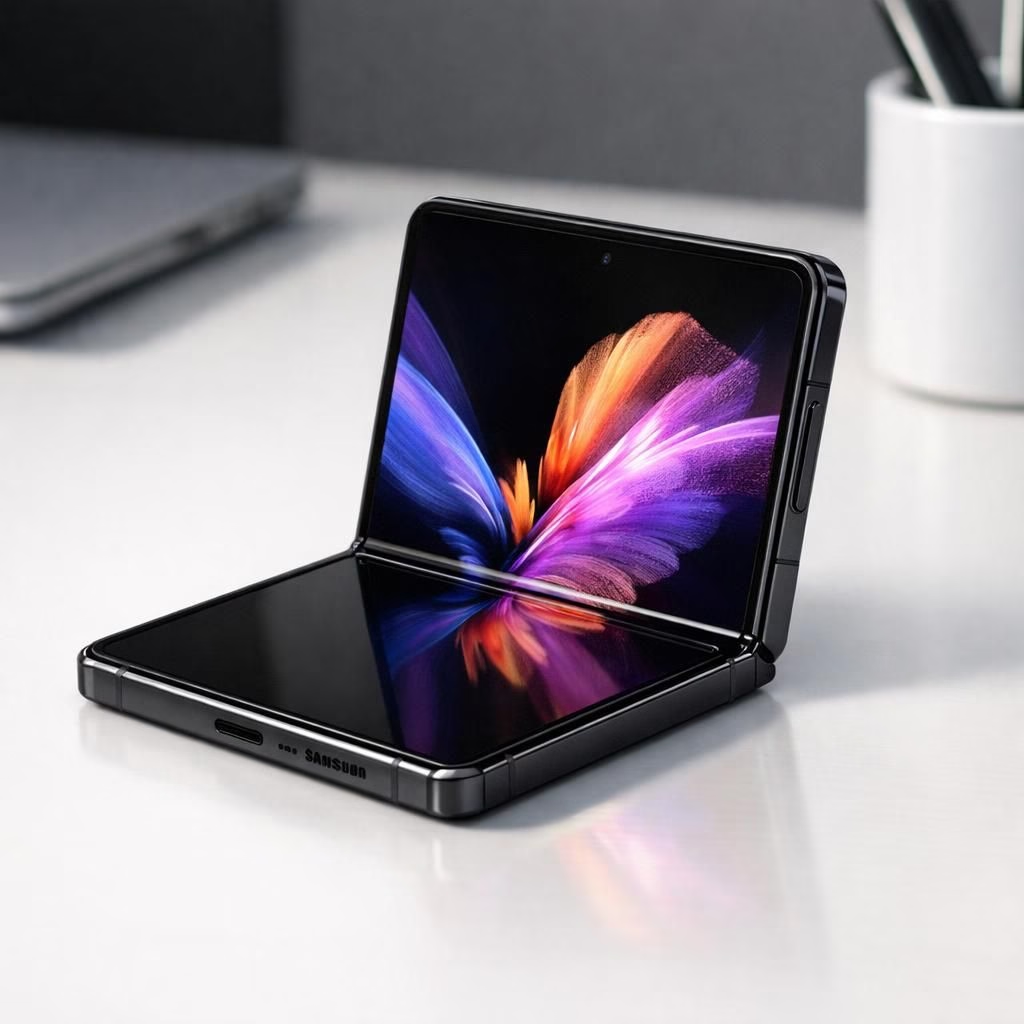
In 2026, foldables have moved from niche gimmick to everyday tool, especially for Samsung fans who juggle work, photos, and a fitness tracker on a single flexible screen.
As hardware evolves, the software and hinge reliability matter most, turning a flexible device into a dependable daily partner.
Foldables and Samsung: A Design-Forward Look
Design and durability go hand in hand with foldables; the real leap is hinge engineering. Samsung and peers have shifted from fragile creases to sturdy, repeatable folding without fatigue. Samsung‘s approach emphasizes consistent color accuracy, minimal glare, and a hinge that remains nearly invisible when the screen is flat. Foldables demand smart software hints, from responsive resizable windows to sensible multitasking nudges.
Historically, durability was the roadblock. Now the conversation centers on long-term usability. The foldable screen might be the star, but the battery chemistry, cooling, and protective coatings are the supporting cast. The goal is a seamless experience: a phone that can breathe in your pocket, then bloom into a workstation on a desk. Here, foldables show their real value: not just a gadget, but a flexible tool that bends with your day. Samsung continues to emphasize user experience, offering predictable updates and a thriving ecosystem where foldables become more than a novelty.
Samsung-powered foldables shine in real-world scenarios: not merely a gimmick, but a practical platform for daily tasks and spontaneous creativity.
Foldables and Samsung: Everyday Scenarios in 2026
Consider a typical day. A Samsung-enabled foldables device handles email on the outside screen during a commute and morphs into a bigger canvas for design briefs once a desk is reached. The software side matters as much as the hardware: optimized app continuity means you don’t lose context when you open and close the device. Samsung‘s software layer has matured to deliver smooth transitions, consistent gestures, and practical multitasking that feels natural rather than forced. Foldables shine in real-world scenarios: cooking guides displayed across a larger panel, travel itineraries arranged in a two-pane view, or a map on one pane with directions on another. Foldables invite a longer attention span because you can spread content across the screen without juggling multiple devices.
In terms of use cases, the foldable form factor lends itself to both work and play. For work, you can draft documents on the larger screen while keeping your reference notes on the outside panel. For play, a game or video can float in the secondary window while you chat with friends in the primary window. Samsung‘s design philosophy leans into these flows, making hardware and software feel like they were born to work together, not forced into a mode switch. The result is a more forgiving, more adaptable device that refuses to go back to the old one-screen era.
Other important considerations include price, repairability, and ecosystem breadth. The best foldables deliver a compelling value when you factor in longevity, not just the initial hype. Samsung‘s rollout strategy has highlighted better repair options and more consistent software support, which lowers the total cost of ownership over time. The foldables category isn’t about chasing novelty; it’s about delivering durable, useful devices that adapt to different contexts—work, travel, or a lazy Sunday gutter-free binge.
From a design standpoint, the story is less about radical aesthetics and more about refined function. The latest foldables blend a slim silhouette with a robust hinge, a display that remains vibrant after countless folds, and a user interface that respects how people actually use their devices. Samsung‘s role in shaping expectations is clear, setting a standard for screen clarity, battery life, and app optimization that helps customers make informed choices rather than chase trends.
As we move through 2026, the foldables landscape remains dynamic. New entrants push the envelope on hinge durability and crease management, but the best designs keep the focus on everyday utility. The conversation shifts from “Can it fold?” to “How well does it fit into real life?” In this sense, foldables and Samsung are less about spectacle and more about solving a daily friction: carrying a single device that can flex to your needs, from a quick check on the outside to a full-screen workstation when you sit down.
What about the future? Analysts expect continued improvements in haptics, software-aware fold detection, and smarter multitasking that anticipates your actions. If you want a device that grows with you, the foldable path is the most promising route. Samsung has shown how to scale a concept into a practical, well-supported platform that many users can rely on day in and day out. Foldables remain a rare blend of form and function, offering a tactile reminder that the best tech elevates not merely the size of a screen but the quality of daily life.
Have thoughts on foldables and Samsung? Share your experiences, questions, or predictions in the comments below. Your perspective helps us all understand how these devices fit into real lives.
Original NBC News article: The fight for the future of foldable phones is here. Special thanks to NBC News for the original reporting.
Practical examples
- Draft documents on the larger panel while keeping notes on the outside using Samsung.
- Keep a video call in a secondary window while you work in the main pane; Samsung speeds multitasking.
- Follow a recipe on one pane while the other shows a timer or map, powered by Samsung.
References
- NBC News – Samsung vs Apple: Foldable phones in focus
- The Verge – Foldable tech coverage
- CNET – Mobile foldables