

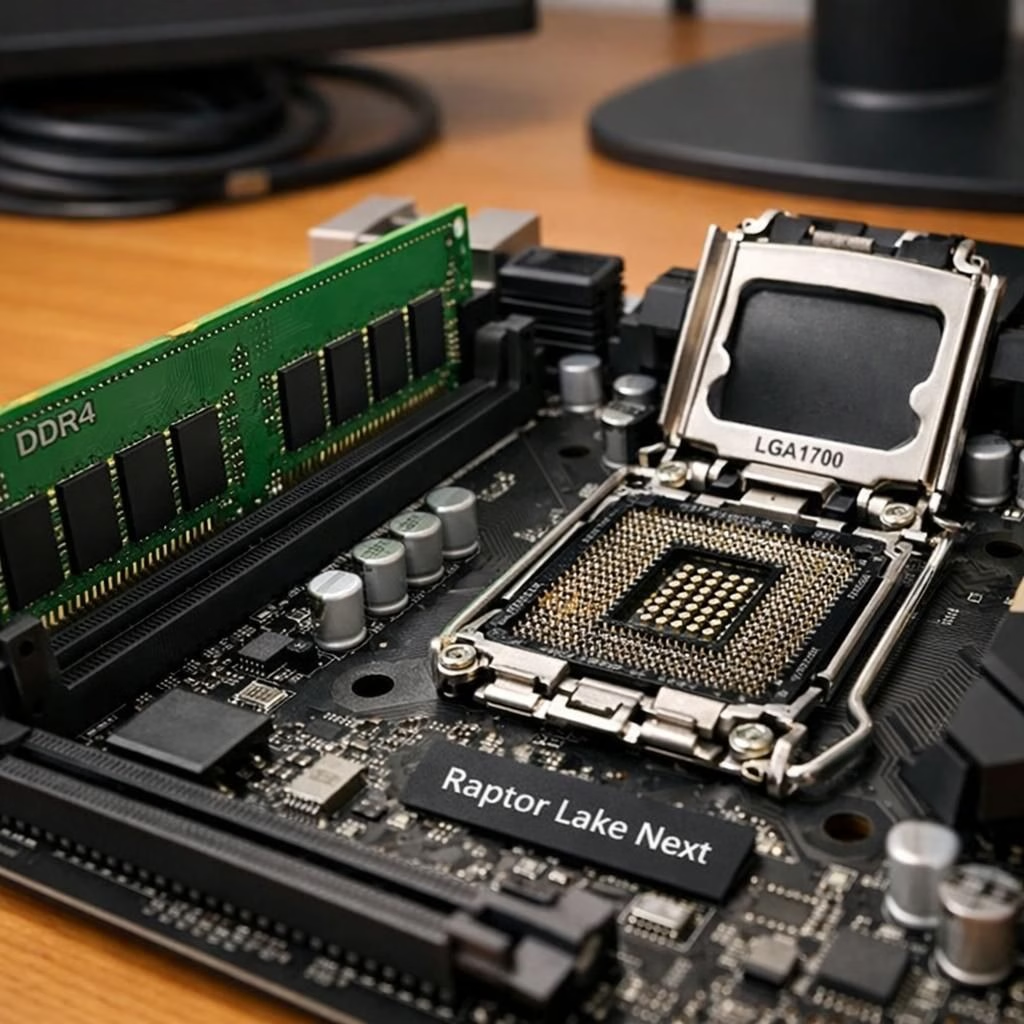
DDR4 and LGA-1700 are back in the spotlight as Intel quietly tees up Core 200 Raptor Lake Next for 2027. The plan blends nostalgia for cost-conscious builders with a pragmatic approach to platform longevity on the LGA-1700 socket. This isn’t just wishful thinking; it’s a careful, PR-tinged strategy aimed at giving a familiar ecosystem a renewed lease on life while offering something approachable for fans who still rely on DDR4 and careful motherboard budgeting.
For many enthusiasts and system integrators, the DDR4 era feels like a reliable first car—not flashy, but it gets you where you need to go. The LGA-1700 platform has matured into a steady workhorse that supports a broad mix of GPUs, storage options, and cooling configurations. If Intel follows the playbook from AMD’s book of platform longevity, then DDR4 memory and the LGA-1700 socket could coexist with Raptor Lake Next without forcing the entire audience to upgrade memory kits or jump to DDR5 at an uncomfortable pace. In other words, the plan seems to be: keep the door open for DDR4 while offering a sensible upgrade path for those who want newer features, efficiency improvements, and the reassurance of a future-proof socket to extend the life of mid-range builds.
DDR4 and LGA-1700 in 2026-2027: A practical, slightly cheeky returns
Let’s talk about the practical economics. DDR4 remains widely available, relatively cheap, and perfectly adequate for many workloads, from office tasks to indie game development. The LGA-1700 platform has shown resilience; it’s compatible with a spectrum of CPUs, cooling solutions, and motherboard firmware updates that keep old rigs relevant. Bringing Raptor Lake Next to this mix would be a cost-conscious move that tempts builders who paused mid-upgrade after DDR5’s price spikes or those who simply dislike breaking the bank for incremental gains. The narrative isn’t about chasing every new memory standard but about balancing capability with budget and compatibility. In a landscape where new CPU launches often require new memory, the DDR4-LGA-1700 pairing could feel remarkably sane for a subset of the audience concerned with total cost of ownership.
From a performance perspective, DDR4’s memory lanes are plenty for many games and content creation tasks, especially when paired with a mid-to-high tier CPU and a balanced platform. The LGA-1700 socket is broad enough to support a diverse set of power envelopes and PCIe configurations, which means Raptor Lake Next could offer competitive performance without forcing an immediate, all-out memory upgrade. The public chatter around this topic also hints at stability expectations: platform longevity has its own value proposition. If Intel designs Core 200 Raptor Lake Next with a flexible memory controller that can support both DDR4 and DDR5 modes, we could see a clean upgrade path that preserves DDR4’s affordability while enabling DDR5-leaning enthusiasts to move forward when they’re ready. This dual-mode approach would validate the idea that the LGA-1700 socket remains relevant through 2027 and possibly beyond, especially for users who value upgradeability over the short-term novelty of new memory standards.
There’s also a story here about the broader ecosystem. DDR4’s continued presence means fewer supply chain disruptions for budget builds. The LGA-1700 platform’s ongoing compatibility reduces the sting of swap-outs for many PC builders who rely on a steady cadence of driver and firmware updates. If Intel’s plan includes a measured, well-supported transition, the result could be a healthier, more diversified market where mid-range systems stay viable longer. For gamers, content creators, and casual power users, that’s a welcome prospect. The idea isn’t to erase progress but to extend practicality, offering a bridge between the comfort of familiar hardware and the promise of modest performance improvements from a refreshed core and cache design on Raptor Lake Next.
Of course, the usual caveats apply: the exact memory compatibility, pricing, and availability will shape how warmly the community receives such a strategy. If DDR4 remains plentiful and affordable in the DDR4-LGA-1700 niche, and if the Raptor Lake Next platform delivers stable performance gains without forcing a complete memory overhaul, then the 2027 timeline could be kinder to builders who value flexibility over the loudest, flashiest headline. It’s not a radical pivot; it’s a conservative, consumer-friendly nudge toward longer platform life and smarter budgeting. And in a world where AMD has shown that longevity can be a winning strategy, Intel may be inching toward a similar, deliberately practical narrative for the DDR4 and LGA-1700 crowd.
As we look toward 2027, the broader tech press and the DIY community will weigh in with test results, practical benchmarks, and compatibility notes. The real test will be whether the market responds with patience and curiosity, or if the call for DDR5-only ecosystems becomes a louder chorus. Either way, DDR4 and LGA-1700 fans have a reason to stay tuned for updates on Raptor Lake Next, because the idea of a budget-friendly yet forward-leaning platform refresh has a certain appeal that resonates with pragmatists and dreamers alike.
Original article attribution: Thanks to the original coverage that inspired this exploration. Source: VideoCardz.
We’d love to hear your thoughts on DDR4 and LGA-1700 in 2027. Please share your comments below and tell us how you’d approach a Raptor Lake Next upgrade strategy.
DDR4 pricing dynamics
For budget builders, DDR4 pricing has remained relatively forgiving, with wide availability. This helps keep mid-range systems affordable as you assemble a balanced rig without jumping to DDR5 right away.
DDR4 kits tend to be plentiful and compatible with a broad range of motherboards, which reduces up-front costs for new builds and refurbishments alike.
LGA-1700 platform longevity
The LGA-1700 socket has shown staying power by supporting several CPU generations and a broad array of motherboard options. In a future that still embraces DDR4, this platform could continue to power mid-range rigs with regular firmware updates and versatile PCIe configurations. The dual-mode approach would let enthusiasts delay a DDR5 upgrade until they’re ready while still enjoying core and cache improvements from Raptor Lake Next.
Practical upgrade steps for 2027
- Inventory your current DDR4 kit and motherboard compatibility before planning any upgrade.
- Check firmware availability and BIOS updates for your LGA-1700 boards to ensure smooth support for Raptor Lake Next.
- Set a realistic budget that separates platform longevity from memory refresh cycles.
- Develop a staged upgrade path: preserve DDR4 now, upgrade to DDR5 later if needed for higher-end tasks.
FAQ: DDR4 and LGA-1700 in 2027
Q: Will DDR4 work with LGA-1700 in Raptor Lake Next?
A: The plan appears to be a dual-mode memory controller that supports both DDR4 and DDR5, enabling a flexible upgrade path without forcing a full immediate memory overhaul.
Q: How will this affect DDR5 pricing?
A: If DDR4 remains viable, its pricing pressure may persist, potentially slowing rapid DDR5 price declines for entry- and mid-range builds.
Q: Should I upgrade in 2027?
A: If you value upgradeability and current platform stability, a measured refresh that preserves DDR4 while offering Raptor Lake Next enhancements could be a prudent, budget-conscious choice.
Q: How long could LGA-1700 last with this strategy?
A: The idea is to extend the socket’s relevance by maintaining backward compatibility with DDR4 while delivering core improvements, potentially stretching mid-range systems well beyond the current generation.
Takeaway
For builders who value flexibility and budget-conscious upgrades, DDR4 on LGA-1700 with Raptor Lake Next could offer a sensible path through 2027 and beyond.