

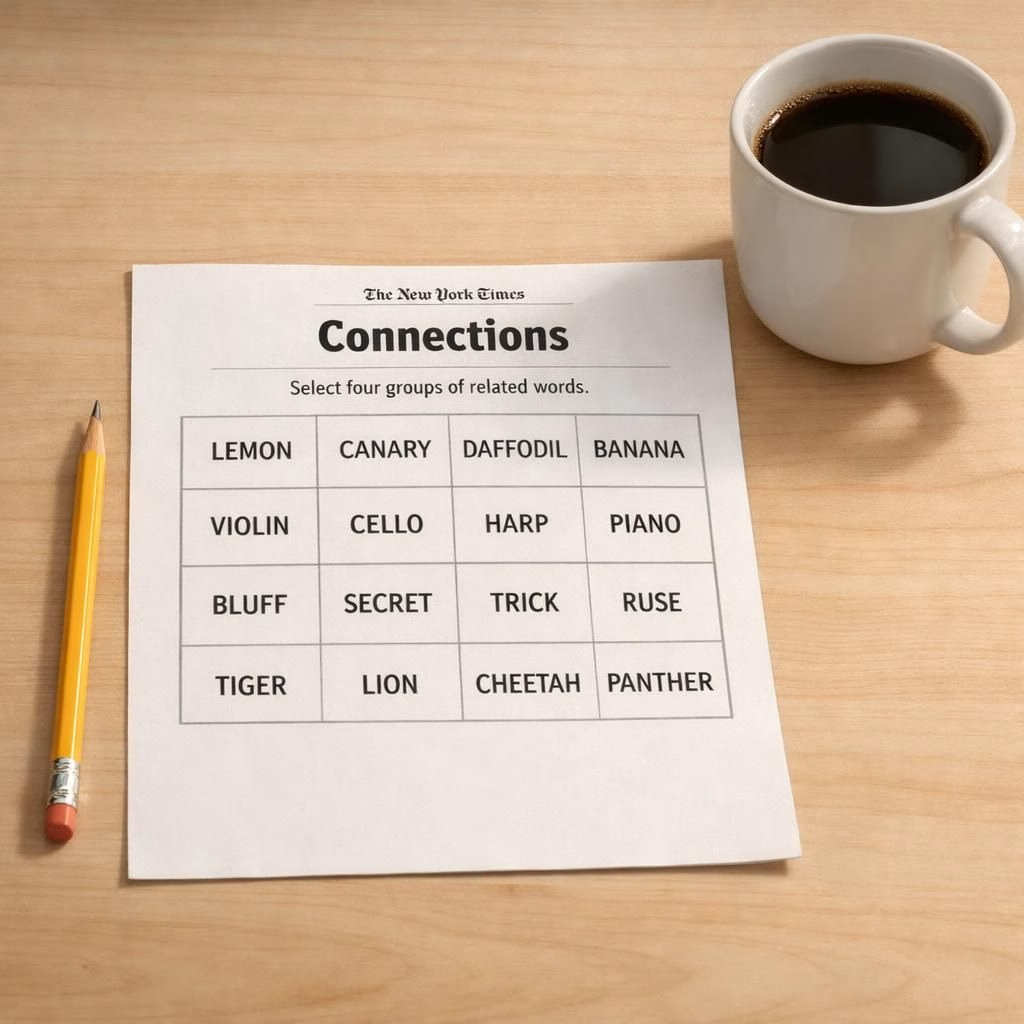
Welcome to a bright, slightly sardonic tour of the NYT Connections world and its word-puzzle quirks. This post dives into connections puzzle dynamics and how puzzle #1100, released in 2026, keeps word-game lovers on their toes with four groups of four that share a hidden link. If you crave a nudge, this post offers practical hints and good humor to keep the curiosity climbing without chewing the scenery.
connections: decoding puzzle #1100 without spoilers
What is NYT Connections? It’s the daily word puzzle from The New York Times that asks you to identify relationships between 16 words and split them into four cohesive groups. Each quartet hides a shared theme, often disguised by a few red herrings and clever misdirections. The color-coded categories—yellow for the easiest, green and blue in the middle, and purple for the tougher, more abstract connections—shape how players approach the grid in 2026.
- Yellow — Qualities that help something continue over time: Legs, Momentum, Stamina, Traction.
- Green — Things people often do before heading out for an evening event: Accessorize, Change, Primp, Shower.
- Blue — Flowers: Anemone, Larkspur, Monkshood, Phlox.
- Purple — Words that can follow the same adjective to form familiar phrases: wild Card, wild Fire, wild Goose, wild Rice.
These four groups embody the core idea of the connections puzzle; spotting the theme in a crowded grid is half the fun. This is where word-puzzle culture meets daily brain teaser joy.
word-puzzle insights: solving the four groups with style
Yellow group insights: The four terms evoke staying power: Legs, Momentum, Stamina, Traction. The logic is not about speed but persistence. You can imagine a long road trip, or a startup that makes it through a winter of uncertain funding. The four words fit together as a set of endurance cues that signal durable progress, a signature of the word-puzzle mindset.
Green group insights: Accessorize, Change, Primp, Shower are all pre-event rituals. The pattern is routine preparation before going out. The momentum comes from simple acts that help you present your best self, especially on a night out or a busy evening. This is where the connections puzzle skill meets everyday life, a cheerful reminder that tiny rituals add up. Also, this is where word-puzzle culture can feel delightfully practical in real life rituals.
Blue group insights: The blue category is the botanical one. Anemone, Larkspur, Monkshood, Phlox are flowers. Recognizing the flower names breaks open the group. The plant images provide a tactile feel that makes the puzzle feel almost garden-like rather than a sterile word club.
Purple group insights: The four words pair with wild to form familiar phrases: wild Card, wild Fire, wild Goose, wild Rice. The aha moment often comes from spotting that wild can lead all four, linking seemingly disparate terms into a tidy phrase family that makes the grid snap into place.
The charm of the NYT Connections word-puzzle is that every solver brings their own style to the grid, turning a simple 16-word task into a tiny, daily victory lap.
Which category was hardest? Many players find yellow and green approachable, but purple usually requires a moment of phrase-pattern recognition. The blue group tests botanical memory or vocabulary beyond everyday florals. The joy comes from discovering how a single linking idea unites the four items and offers a satisfying click in the mind.
connections at a glance: mood, method and minimal spoilers
Puzzle #1100 offers a balanced blend of straightforward thinking and clever wordplay. The yellow and green groups provide accessible entry points, while the flower cluster adds a botanical spice. The purple group provides the final challenge, rewarding players who recognize the hidden phrase pattern and enjoy the playful ties between words.
And if you used hints, you’re still part of the club. The charm of the NYT Connections word-puzzle is that every solver brings their own style to the grid, turning a simple 16-word task into a tiny, daily victory lap.
Thanks to The New York Times for making puzzle #1100 possible. If you’d like to see the full original puzzle and official solution notes, visit the original article here: NYT Connections puzzle #1100.
Want to weigh in? Share your thoughts in the comments below; I’d love to hear how you approached puzzle #1100 and which category felt trickiest for you.
Special thanks to The New York Times for providing the original material and inspiration for this rewrite; your puzzle creativity keeps the internet curious. For attribution to the original source material, you can visit the following link: The New York Times.
connections: quick-start strategies
For readers who want a practical way to tackle the grid, here are quick steps to start solving Connections today:
- Scan for obvious groupings (yellow and green clues often hide in everyday terms).
- Test each quartet against a single theme before locking in four items.
- Use the purple category as a last resort: think of common phrases that start with the same adjective.
FAQ about NYT Connections #1100
- What is NYT Connections? A daily NYT puzzle that sorts 16 words into four related groups.
- Do hints expose spoilers? It’s best to treat hints as gentle nudges to avoid spoiling the fun.
- Where can I see the original puzzle? The NYT game page hosts the official puzzle and notes; see the linked puzzle #1100 above.
- How should I handle the purple category? Look for common phrases that begin with the same adjective.
References
- https://timesofindia.indiatimes.com/technology/gaming/nyt-connections-hints-and-answers-today-june-15-2026/articleshow/131742036.cms