

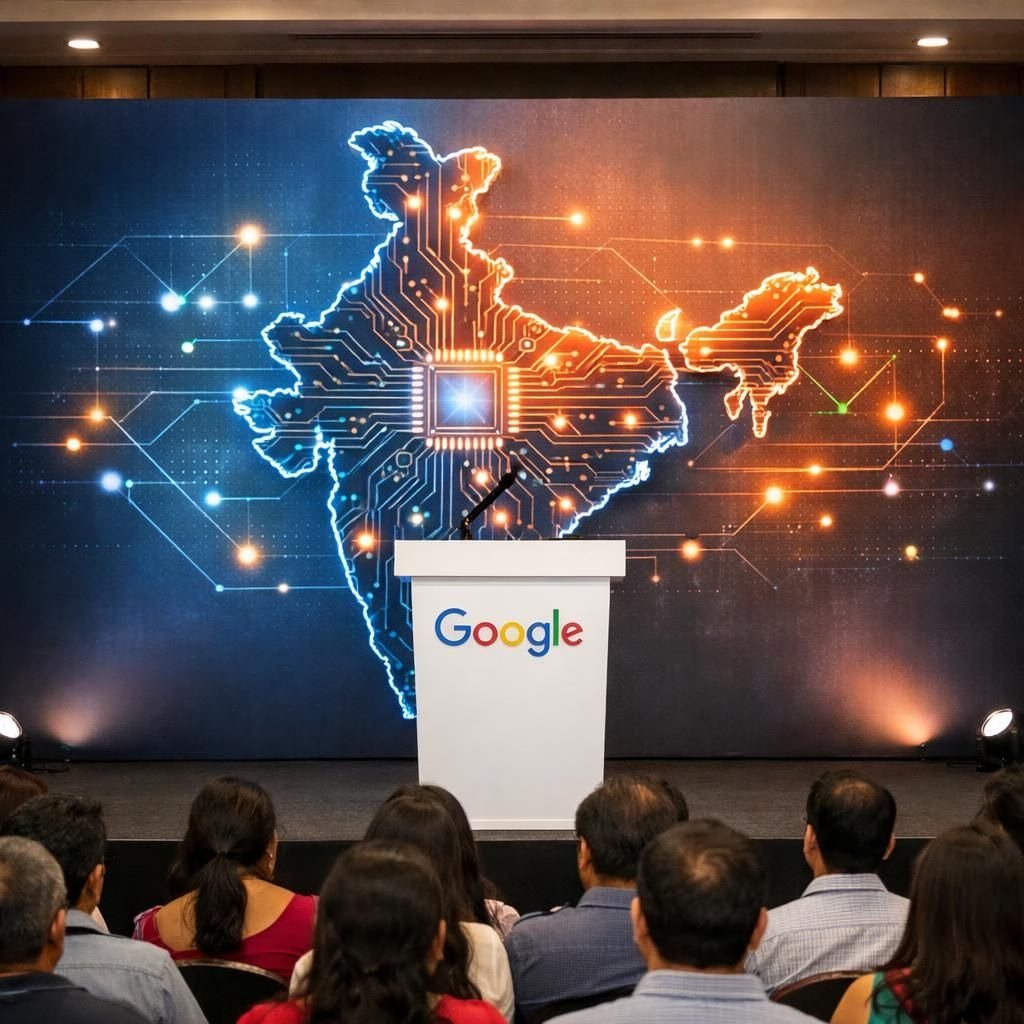
AI India and Inclusive AI are not just buzzwords; they mark the opening act of Google’s 2026 agenda. Sundar Pichai framed India’s AI potential as one of the most promising ecosystems worldwide. He called AI the biggest platform shift of our lifetime and said it could transform healthcare, agriculture, and everyday sectors. The idea is simple: AI India works best when Inclusive AI sits at the center, with trust rooted in transparency, safety, and outcomes.
Sundar Pichai underlined that India’s languages, digital public infrastructure, and local context create a powerful base for real AI impact. The takeaway is hopeful: India could show the world how to democratize AI without leaving people behind.
AI India 2026: Inclusive AI on the rise
In practical terms, AI India benefits from a language-rich audience and a robust digital backbone. Pichai emphasized that this language ecosystem can power AI in clinics, fields, and classrooms. The vision is practical, not fantasy; a toolkit for everyday users. When systems are multilingual, people see Inclusive AI as a helper rather than a mystery.
Inclusive AI and AI India: Language and trust at scale
The India-America Connect Initiative announced will deploy new subsea cable routes to boost AI connectivity between the United States, India, and southern hemisphere partners. The plan promises stronger digital infrastructure in India and faster data transfers, which AI workloads crave. This effort supports AI India’s maturation and, through Inclusive AI tools, expands reach to more people.
On education and skilling, Google unveiled ambitious programs. A Google AI Professional Certificate in English and Hindi will help the youth prepare for an AI-driven future. Atal Tinkering Labs will bring generative AI tools to 10,000 schools, and Karma Yogi Bharat will support over 20 million public servants with AI tools. The USD 30 million AI for Science Impact Challenge will push global research forward. These efforts show AI India will be supported by education, not just hardware, and the strategy hinges on Inclusive AI to respect language, culture, and daily life.
In terms of collaboration, Pichai highlighted partnerships with IITs, government agencies, and research institutions to expand AI access responsibly in India. Large-scale infrastructure investments and skilling programs point to a durable growth path for AI India over the coming years. The story is less about hype and more about a multi-year plan that aligns with government policy and local entrepreneurship. It is a reminder that technology can serve people when built with local insight and a bias toward inclusion.
Beyond infrastructure, the talk frames AI as a tool for social good. Expect better crop yields, early disease detection, more accessible health care, and smarter public services. All of this hinges on trust, which comes from transparency and accountability. The result is a national AI strategy that looks practical, not purely theoretical, and that invites involvement from students, teachers, doctors, farmers, and developers alike.
Original article: PTI AI Impact Summit 2026 coverage. A big thank you to PTI for their coverage and insights that informed this piece.
Practical steps for readers
- Explore AI tools in your field with multilingual support to align with local norms.
- Follow certified skilling programs like the Google AI Professional Certificate to build foundational skills in English or Hindi.
- Engage with local institutions (IITs, labs) to support responsible AI experimentation.
- Stay informed about new AI infrastructure initiatives such as the India-America Connect and the USD 15B hub.
FAQ
- What is AI India? It describes India’s growing role in developing and deploying AI at scale across sectors.
- What is Inclusive AI? Inclusive AI means building systems that respect language diversity, culture, and local needs while prioritizing safety and transparency.
- How will the India-America Connect Initiative impact AI in India? It aims to improve high-speed connectivity for AI workloads and support a bigger AI ecosystem with more research and startup activity.