

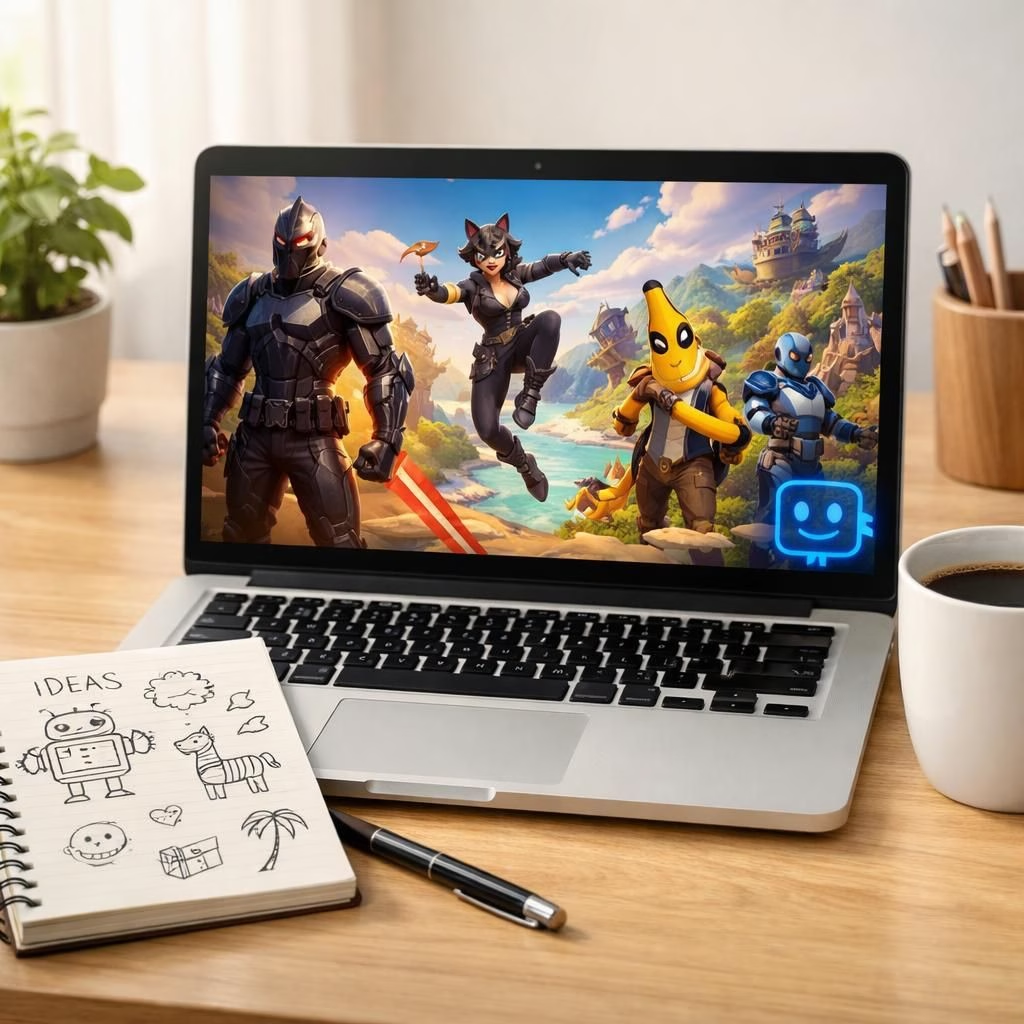
In 2026, Epic Games’ Fortnite becomes a living lab where AI experiments meet creative chaos. AI prompts propose new cosmetics, map tweaks, and tiny visual quirks. Fortnite players watch designers refine these AI-born ideas, deciding what deserves a place on the island. The result is a faster, friendlier iteration cycle that respects artistry while embracing the happy accidents that come when a machine tries its hand at style. AI in Fortnite is a playful co-pilot that reminds us that innovation often starts with a misread and a wink.
Broad coverage frames this as a collaboration rather than a takeover. The idea is to generate options quickly, not replace the craft of human artists. In Fortnite, concept art, color keys, skins, and environments can start as AI sketches, then undergo human refinement. The practice foregrounds speed and breadth—AI can explore more design space in minutes than a team could in days. But the human touch remains essential: the AI can propose, and designers approve or pivot. The balance keeps Fortnite fresh while ensuring the creative DNA stays intact.
AI and Fortnite: playful experimentation drives design
When AI enters the canvas of Fortnite design, the team treats it as a versatile collaborator rather than a black-box magician. A prompt might request a cape that hints at a storm but reads as friendly to new players. The outcome may include mood boards with neon pinks, ocean blues, and a practical texture map; the final call comes from seasoned artists who know how a skin reads in motion, in combat, and at different distances on screen. AI in Fortnite speeds up exploration: more options, faster iterations, and a better sense of vibe before the season drops. The tech is a productivity tool, not a replacement for taste, and that distinction keeps the project honest and human-friendly.
AI in Fortnite: iterative art, not doom
As with any experiment, missteps show up. The AI might propose a character with an improbable silhouette or a texture that looks great in a still image but behaves oddly in animation. That’s where humor meets humility: teams collect the quirky outputs, share a quick laugh, then refine the prompts. The goal remains clear: learn, iterate, and ship better visuals and more cohesive experiences. This mirrors good software development—build, test, measure, adjust. It also echoes a broader truth about Fortnite in games: the stronger the human feedback loop, the more reliable the results. Fortnite enjoys a robust feedback loop that turns mistakes into design inspiration rather than dead ends. AI helps, it does not decide alone, and Fortnite remains a human-crafted stage for play and expression.
Beyond cosmetics, the AI-enabled workflow helps with environment context, lighting studies, and performance checks. The AI batch-generates several variants of a virtual tree or rock formation, then the artists choose which to keep, refine, or discard. The process reduces busywork while expanding creative possibilities. In practice, that means fewer late-night crunches and more time for experimentation, collaboration, and storytelling—three things that keep Fortnite lively for players who care about atmosphere, not just loot. The generative approach also invites communities to imagine ideas and test them indirectly, fueling conversations that feed back into the cycle in near real time.
Of course, this is not a blind endorsement of everything AI can do in Fortnite. The real value comes from careful curation and clear guidelines: define art direction, set style boundaries, monitor edge cases, and maintain accessibility. The practical takeaway for developers and players alike is that AI in Fortnite can expand the design space without diluting identity. When done thoughtfully, AI helps keep the island vibrant while preserving the signature charm that players fell in love with years ago. The technology is a tool for augmentation, not a substitute for taste, and Fortnite proves that a well-managed AI workflow can feel like a shared adventure rather than a cold machine sermon.
For readers curious about the broader trend, coverage from Kotaku, The Verge, Creative Bloq, and IGN shows a common thread: AI is shaping how games are conceived, not how players experience fun. In Fortnite, the result is a more varied, more iterative development process that respects craft and embraces experimentation. The line from concept to reality remains a human journey with AI providing the spark and the crew applying the finishing polish. The endgame is better visuals, richer environments, and a stronger sense of play—precisely the kind of collaborative progress that makes modern game development worth cheering for.
If you’re excited about where AI and Fortnite will go next, stay curious and keep an eye on the waves of change as they break on the island. The balance between clever bot-assisted ideation and human storytelling continues to shape not only Fortnite’s aesthetics but how all games imagine their future. AI helps creators push imaginative boundaries with less friction, and Fortnite shows it can be both a place to have fun and a place to learn how to work with powerful tools responsibly.
Original reporting and perspectives inspired this piece. A special thank you to Kotaku for the original material: Epic Games Is Using Generative AI In Fortnite To Make Mistakes. We appreciate the thoughtful conversation this article sparked and invite readers to explore the linked material for more context.
FAQ
- Q: What does AI bring to Fortnite design without replacing human artists?
- A: It accelerates exploration, delivering more options quickly while leaving final decisions to designers. This maintains the game’s identity and artistic direction.
- Q: How does the feedback loop work in practice?
- A: Designers review AI outputs, tweak prompts, and test visuals in motion. Revisions flow back into the cycle before the season ships.
- Q: Are there accessibility concerns with AI-generated content?
- A: Yes. Teams set clear style boundaries and test for readability and inclusivity across players and devices.
Practical steps for teams exploring AI in design
- Define art direction: Establish the mood, color language, and silhouette rules before generation.
- Seed with guided prompts: Provide prompts that align with the desired vibe and accessibility goals.
- Review and filter: Have human designers curate results, flagting assets that don’t fit or feel off in motion.
- Iterate with feedback: Refine prompts based on playtests and performance checks, not just aesthetics.
- Document decisions: Create a clear record of why certain outputs were kept or discarded to maintain continuity.
Conclusion: a shared, evolving craft
When used thoughtfully, AI acts as a collaborative partner that expands the design space without erasing the human touch that defines Fortnite. The island remains a canvas for play, storytelling, and inspiration—now with a broader toolkit for experimentation. For players, this means richer visuals and environments; for creators, a faster path from idea to in-game moment. The best outcomes come from steady human oversight, practical guidelines, and a culture that treats AI as an augmenting ally rather than a replacement.