

AI assistant on board: Rivian aims to redefine EV tech
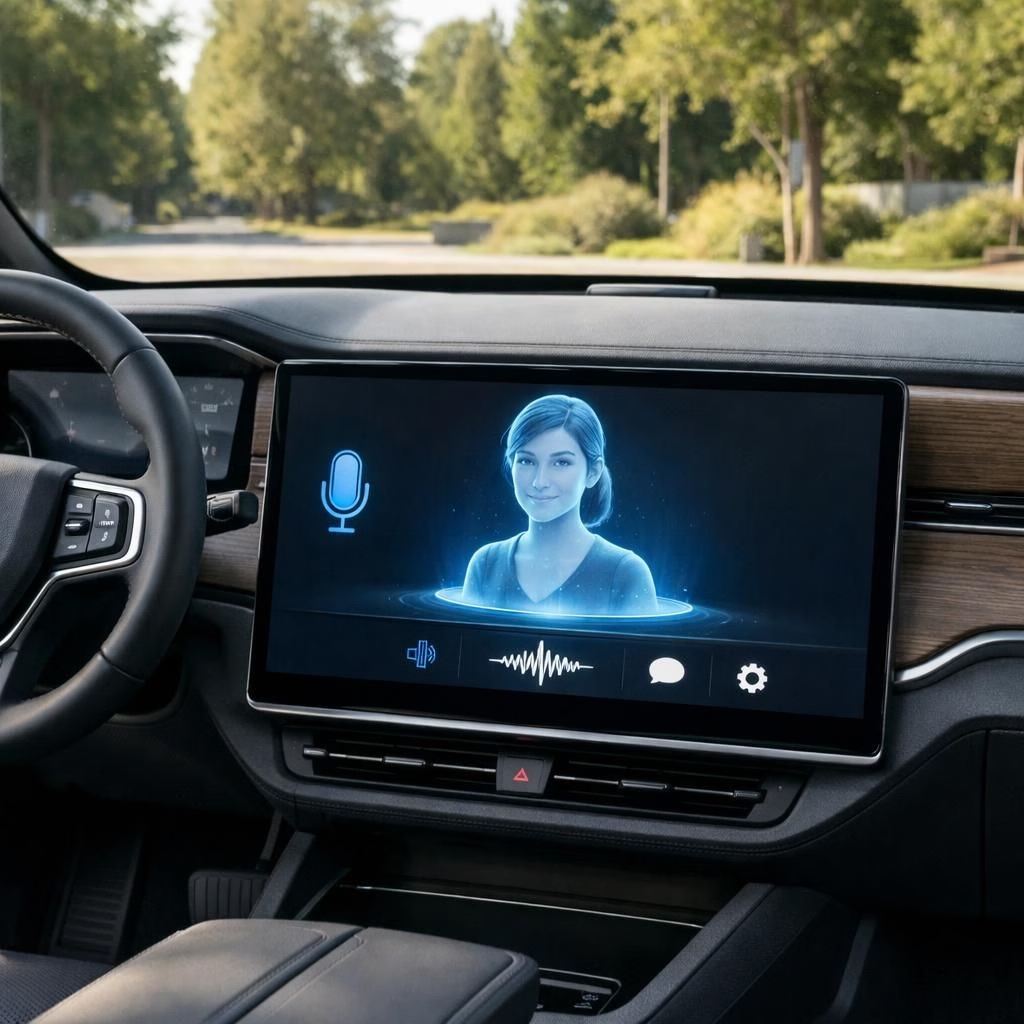
AI assistant Rivian fans, gather around. The 2026 update introduces this onboard helper designed to help, not hog the spotlight. You can summon it with a simple hello, and it responds in a steady, calm voice. This feature pairs practicality with personality and safety, without requiring you to master a new dashboard.
Rivian is showing what the AI assistant can do: practical steps and smart thinking
The onboard AI assistant can be woken with a simple Hey Rivian. It handles climate, seat adjustments, mirrors, navigation, and media with a calm, confident tone. It can pull up routes faster, adjust cabin temperatures, and pick the right playlist for the drive. The design leans toward local processing for privacy, with cloud help only when the query gets tricky.
EV tech and the AI assistant: a combined upgrade
Two things stand out. First, the AI assistant integrates with vehicle controls in a way that feels natural. You can adjust the climate and seats, dim the cabin lights, or switch driving modes with spoken requests. Second, the Rivian assistant offers proactive help. It can remind you about charging schedules, suggest scenic routes, and flag maintenance needs. This approach keeps the driver in control while reducing the cognitive load that can come with a feature-rich EV.
On privacy, Rivian emphasizes on-board processing for most tasks. This minimizes data sent to the cloud. When cloud support is needed, it happens behind the scenes with clear prompts. You stay in the driver’s seat when it comes to data sharing.
Compared to other coverage, Rivian stands out by focusing on practical control and a friendly personality. Other articles celebrate the same themes—a voice-activated helper, full vehicle control, and smarter interactions—but Rivian brings a calmer, more approachable approach to EV tech. The AI assistant feels more like a helpful navigator than a gimmick, and that makes a difference when you spend hours behind the wheel. This is the beauty of well-executed EV tech: it blends intelligence with empathy, guidance with grit, and keeps your eyes on the road.
Where this goes next for the AI assistant and EV tech
Expect refinements as software evolves. The current release already covers core tasks, but ongoing updates will improve natural language understanding, prediction, and integration with third-party apps. Rivian will likely expand the set of commands and offer more personalization. The aim is to make the AI assistant feel like a trusted co-pilot that respects your preferences and your time. The EV tech ecosystem benefits when a leading maker like Rivian invests in a robust voice interface, not a loud one.
As with any new tech, try practical scenarios: a morning commute, a long road trip, or a quick city dash. See how it handles lighting, climate, music, and navigation. You might be surprised at how quickly you forget manual controls. That is the point: better ergonomics, safety, and vibes, all wrapped in a single AI assistant that wears a Rivian badge with quiet confidence.
We invite you to share your experiences with the Rivian AI assistant in the comments. Tell us what works, what surprises you, and what you want next from this EV tech companion. Your feedback helps shape future updates and guides other drivers toward smarter, safer, and more enjoyable rides.
Original article and appreciation: thanks to InsideEVs for the original coverage and inspiration. For the full context, you can check InsideEVs here: InsideEVs coverage. We are grateful for the thoughtful reporting that helped inform this rewrite.
FAQ
- What can the Rivian AI assistant control? It handles climate, seating, mirrors, lighting, navigation, media, and reminders, all via voice commands.
- Where is my data processed? Most tasks run on-board; cloud support happens only for complex requests with user consent.
- Will using the AI assistant distract me? Rivian designed prompts to minimize distraction and will not override essential safety settings without your consent.
- Will the AI assistant get more capable over time? Yes. Software updates aim to improve understanding, prediction, and personalization.