

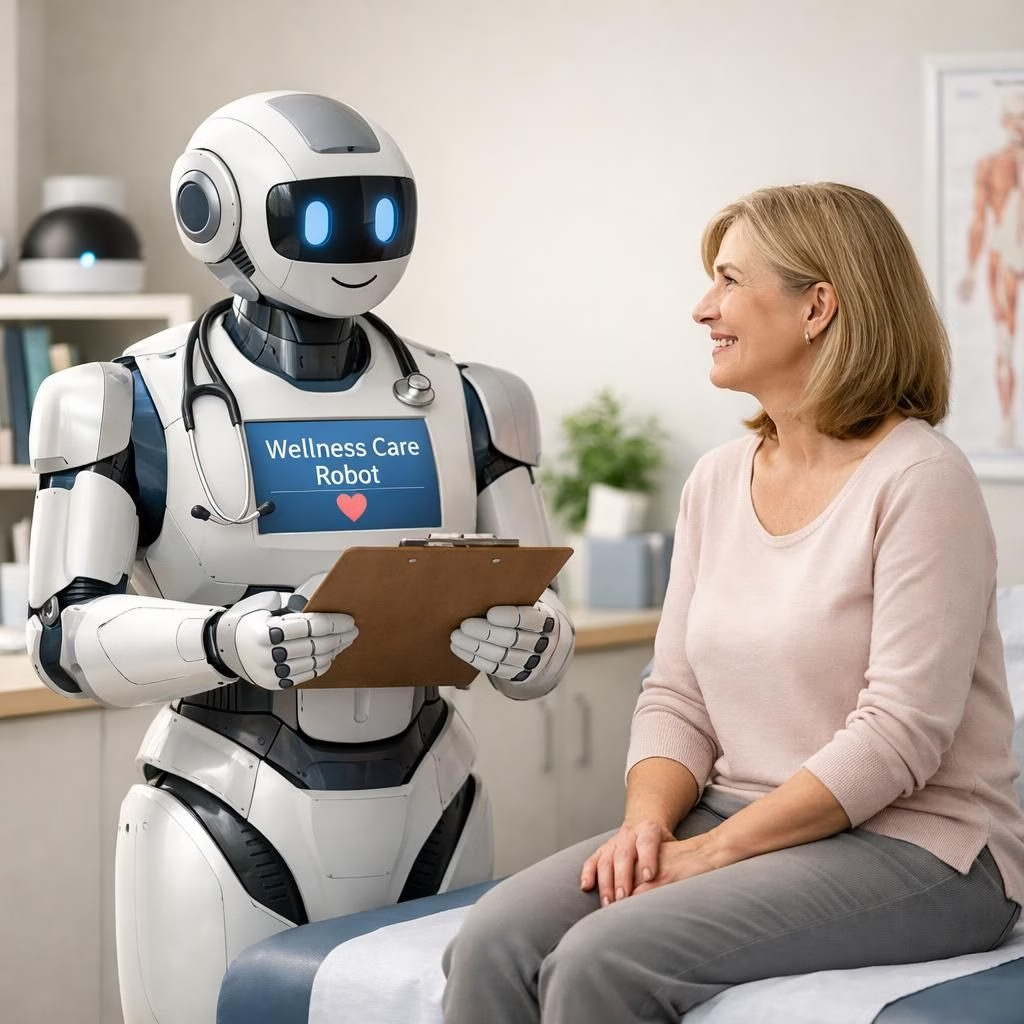
In 2026, Acoustic Technology is shaping the backbone of smarter wellness solutions, while the Wellness Care Robot pilots quietly take up residence in clinics and homes. This update highlights tangible progress with optimism and practical tone. Datasea relies on Acoustic Technology to power its innovations across healthcare and environmental hygiene, and it is preparing for a U.S. market launch of its acoustic disinfection product line. The journey remains grounded in scalable partnerships, not fairy dust, with the promise of measurable momentum.
The press release notes Datasea’s reach across more than 50 Chinese cities and hundreds of service locations, reflecting execution and local demand. Internationally, the company has established market cooperation across Asia, including South Korea, Hong Kong, Taiwan, Singapore, Indonesia, and Malaysia. In the United States, early-stage commercial rollout activities are underway with pilots and customer engagements in Boston, New Jersey, Los Angeles, and Phoenix. The dual-track strategy—Wellness Care Robot growth and the U.S. disinfection initiative—forms a coherent path: deploy reliable hardware, pair it with intelligent services, and capture rising demand for safer, cleaner environments. The narrative stays practical: more deployments, more pilots, and a clearer path to revenue rather than a wishful forecast.
Acoustic Technology Momentum in 2026
The two-pronged approach centers on proprietary products, strong intellectual property, and a scalable deployment model that reaches healthcare, beauty, wellness, and consumer care settings. The Smart Air Sterilizer, Datasea’s acoustic disinfection device, has completed overseas testing and is moving toward U.S. commercialization via Datasea Acoustics LLC. The synergy is straightforward: Acoustic Technology powers air hygiene, while the Wellness Care Robot extends capability into care delivery and customer experiences. As the company notes, multiple revenue streams may emerge—from hardware sales and service fees to system integration and recurring service-based revenues for deployed terminals and operating scenarios. A practical, blended business model is precisely what you want when planning a scalable rollout across diverse markets.
For broader context on indoor air hygiene standards, see ASHRAE’s guidance on ventilation and indoor air quality. ASHRAE Standards.
The World Health Organization also outlines air quality guidelines to minimize infectious disease transmission. WHO Air Quality Guidelines.
Wellness Care Robot Pilots Across Markets
The Wellness Care Robot line is already deployed in multiple cities and service sites in China, with ongoing international cooperation in Asia. Datasea’s strategy emphasizes a broad commercialization pathway that blends wellness, healthcare, intelligent services, and environmental hygiene. The goal is not just a single device, but a family of solutions that can be deployed quickly, integrated with existing workflows, and supported by a robust service model. For the U.S. market, early-stage pilots in major metropolitan areas signal a measured entry that prioritizes customer feedback, regulatory alignment, and a clear value proposition: safer environments and improved hygiene.
The Wellness Care Robot thus serves as a practical anchor for a broader acoustic technology platform designed to reduce pathogen presence and improve air quality in a range of environments—from homes to airports to classrooms.
In parallel with growth in wellness robotics, Datasea highlights its disinfection portfolio, including the Smart Air Sterilizer, as a key driver of environmental hygiene solutions. The device’s intent is straightforward: reduce pathogens, improve air quality, and fit into homes, hospitals, hotels, schools, and other public spaces. The same Acoustic Technology that powers disinfecting action can support a wider set of use cases in care, hospitality, and consumer spaces. The result is a cohesive ecosystem where Acoustic Technology and the Wellness Care Robot function as complementary pillars of the company’s broader high-tech commercialization strategy in the United States and internationally.
The Wellness Care Robot expansion and the U.S. market entry of the acoustic disinfection products depend on execution progress and market conditions. There are no guarantees, but there is a credible, actionable path forward. Datasea positions itself as a provider of end-to-end solutions: hardware, software, and services that together enable safer environments and enhanced service experiences. The strategic narrative is not merely about novelty; it’s about building a practical platform that can be deployed, supported, and monetized across multiple sectors and geographies. As the market evolves, the hope is that Acoustic Technology and the Wellness Care Robot will become familiar, trusted components in a wider ecosystem of smart, hygienic environments.
The message for investors and stakeholders is straightforward: Acoustic Technology with a scalable go-to-market model balances innovation with real-world adoption. The company emphasizes proprietary technology, strong IP, and cross-market deployment to support durable growth. The broader takeaway is constructive: when a company blends advanced acoustic capabilities with pragmatic market execution, there is a credible route to higher revenue and broader impact. The team continues to monitor market adoption, regulatory timelines, and customer demand to refine this plan as needed, with a clear eye on sustainable growth rather than a one-off win.
Datasea notes that progress in these initiatives is subject to execution, market conditions, and other uncertainties. The company remains committed to transparency and to updating stakeholders as developments unfold. The balance of optimism and realism is intentional: the technology is real, the markets are receptive in many places, and the path to incremental revenue is not merely hypothetical.
In sum, Acoustic Technology and the Wellness Care Robot are not just buzzwords but a practical, expanding platform with a credible roadmap. The Wellness Care Robot remains a practical anchor in this expansion, guiding deployment and customer engagement across markets. The 2026 narrative centers on deploying reliable products, expanding international reach, and pursuing a combined strategy that uses hardware, software, and services to improve safety, hygiene, and care experiences across diverse settings. With ongoing collaboration, testing, and market engagement, the company aims to translate the promise of its technology into tangible value for customers and investors alike.
Readers are encouraged to share their thoughts and experiences with acoustic technology, wellness robotics, and environmental hygiene solutions in the comments below. Your insights help shape how these innovations fit real-world needs and everyday workflows.
Original article and thanks to Datasea: Special thanks to Datasea Inc. for the original press release and for sharing their forward-looking growth story. Source reference: Datasea press release via PR Newswire and the company website. Visit https://www.dataseainc.com/ for more information and official updates.
Practical Deployment Steps
- Align product roadmaps with regulatory timelines and customer needs in target markets.
- Run controlled pilots with clear KPIs for safety, reliability, and user experience.
- Collect feedback, iterate quickly, and scale through strategic partnerships.
- Integrate hardware, software, and services into existing workflows to minimize disruption.
FAQ
- What is Acoustic Technology and how does it apply to wellness robotics?
- What regulatory steps are anticipated for U.S. market entry?
- When might incremental revenue from these initiatives be realized?