

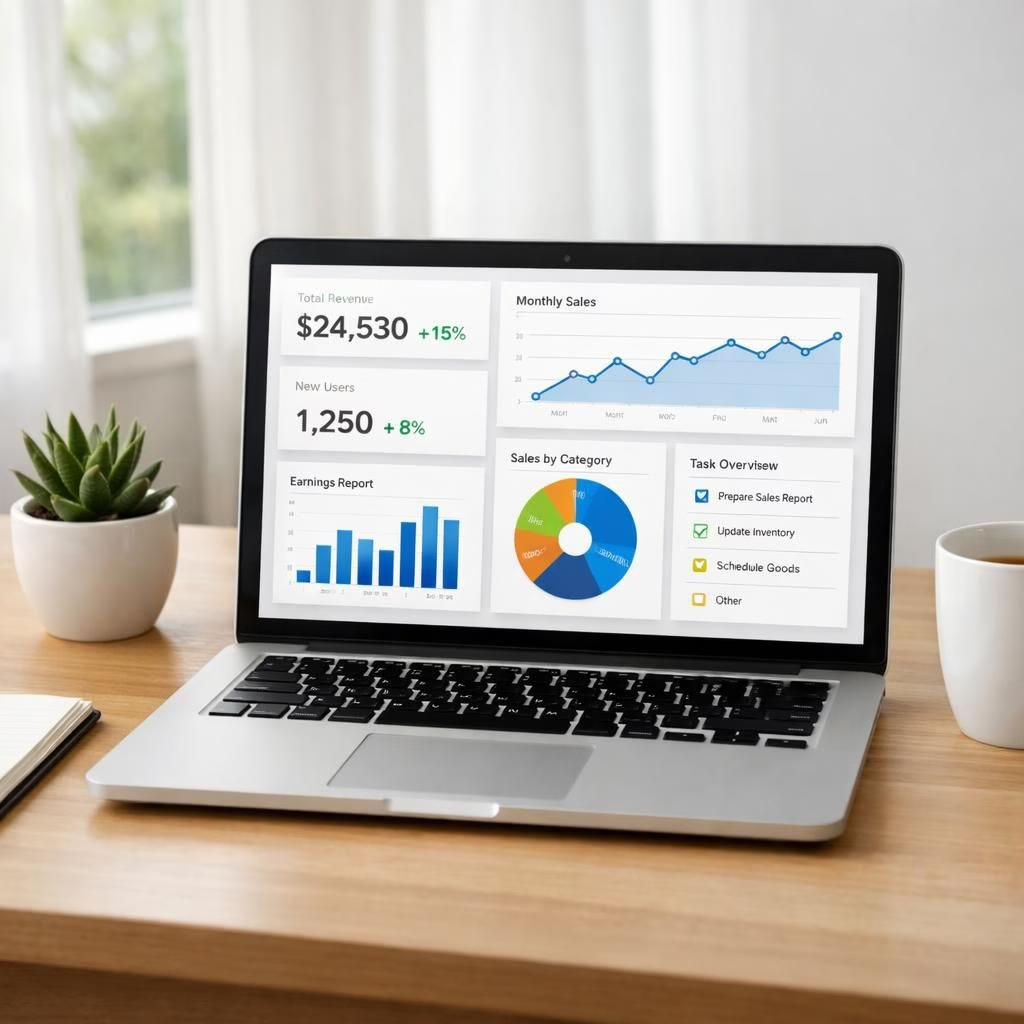
This piece looks at Claude and the Reflect Dashboard with a friendly grin. The goal is practical, not pompous, and to explain why these tools matter without turning you into a data zombie.
We borrow lessons from Engadget’s take on the topic, then translate them into a real world workflow that fits a busy life in 2026.
Bottom line: powerful tech should serve people, not the other way around.
If you want to skim, think of this as a friendly map to balance dashboards with daily life.
Claude and Reflect Dashboard: A Friendly Intro
Thoughtful design matters more than shiny gimmicks. A tidy cockpit for curiosity helps you see patterns quickly without getting lost in tabs. Start small: one pane that answers a single question about your day, such as whether you’re moving forward or stalling on current tasks. Keep the interface lean, because a cluttered screen steals focus and drains energy. Accessibility matters: readable typography, clear labels, and a cadence that suits your routine make the tool worth returning to. The core idea is empowerment: data should illuminate choices, not glare at you until you blink.
A Reflect Dashboard setup helps you stay focused.

Using Claude in Reflect Dashboard: Practical Steps in 2026
Step one is defining a single daily question. For example: what is my focus for today, and which small task will move the needle? This keeps you from chasing every shiny feature at once.
Step two is choosing a minimal data feed. If you can keep to one source—calendar, tasks, or notes—you’ll get a readable signal instead of a data deluge. To keep it lightweight, try a Reflect Dashboard setup that pulls from one source.
Step three is crafting a compact prompt that translates questions into actions. The aim is clarity, not verbosity. A crisp prompt yields crisp answers, so you can act instead of dithering.
Step four is setting a gentle reminder to review, adjust, and reset goals. Regular, brief check-ins beat marathon sessions and fatigue.
Step five is the personal reset: before you close your laptop, step outside for a moment. A short walk does more for focus than a dozen open tabs ever will.
With Claude guiding the prompts, you still own the pace and the priorities.
If things drift, tweak the Reflect Dashboard to surface one top priority instead of a long list.
In practice, this approach keeps you productive without becoming a slave to metrics. The goal is to present a story the human brain can follow, not a ledger that drains energy. If you find yourself slipping, scale back the data or reduce the prompts until the rhythm returns.
Key takeaway: let the tool assist, not overwhelm, and always leave room for human time away from screens.
Thoughts, questions, or your own experiments with this approach are welcome—share them in the comments so we can learn together.
Original article: Engadget article.
Takeaway
Takeaway: let the tool assist, not overwhelm, and always leave room for human time away from screens.
Claude + Reflect Dashboard: Frequently Asked Questions
What is Claude?
Claude is a conversational AI assistant from Anthropic designed to help with natural language tasks, drafting, and quick reasoning.
How does Reflect Dashboard fit with Claude?
The Reflect Dashboard acts as a lightweight surface to view your priorities, while Claude handles prompts and insights. Use the pairing to reduce clutter and stay oriented.
Is Reflect Dashboard suitable for busy days?
Yes, if you keep the setup lean: one daily question, one data source, and a short prompt. A calm surface beats a long, noisy screed of numbers.
How do I get started?
Start with one focus, one source, and a tiny prompt. Then add only if it helps. If you drift, pause and reset.
Why anchor Reflect Dashboard links?
To keep the experience clean and focused, we link to the Reflect Dashboard resource where it helps, while keeping the emphasis on practical steps for Claude users.
References
- Engadget: How to Use Claude Reflect Dashboard Guide
- Claude – Anthropic
- Dashboards: Design and Usability – Nielsen Norman Group
Original source linkback retained above: https://www.engadget.com/2217921/how-to-use-claude-reflect-dashboard-guide/