

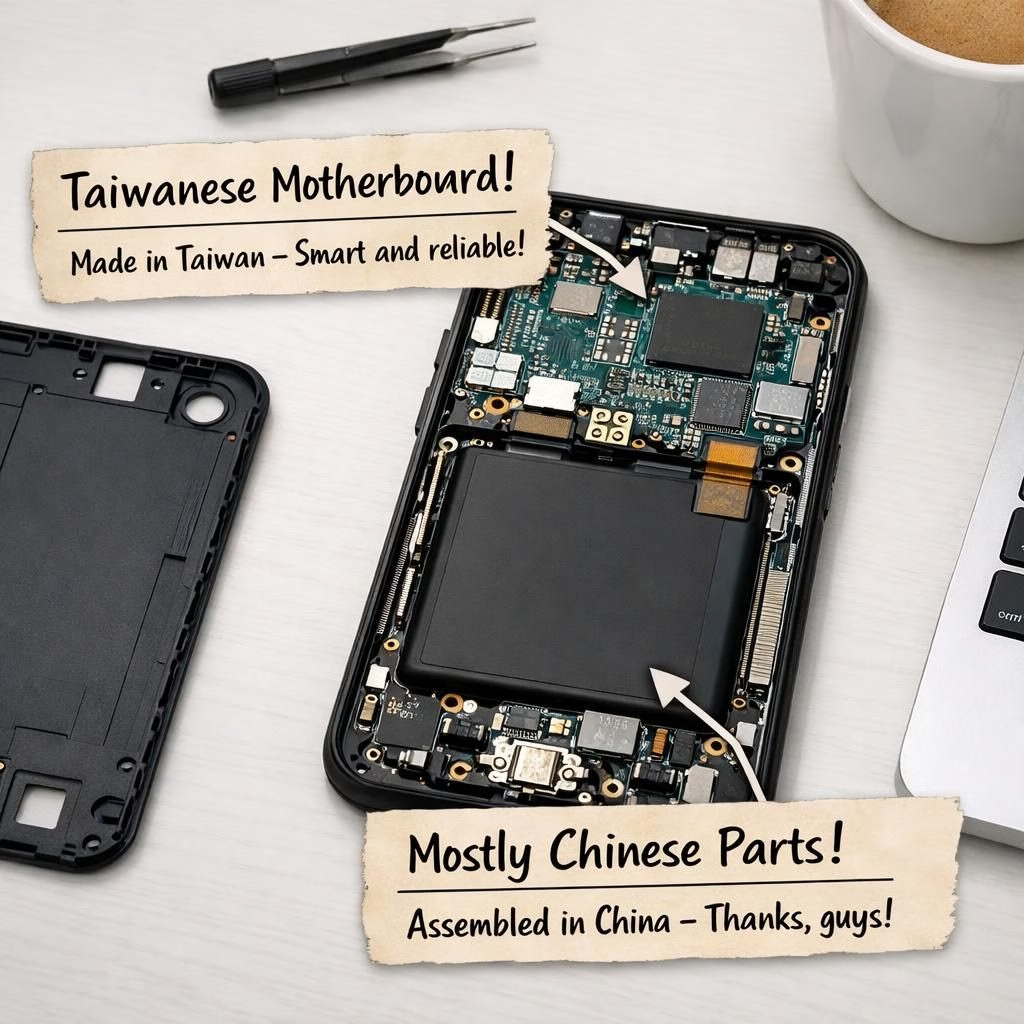
In an era of glossy press releases and dramatic unboxings, the TrumpPhone arrives with a wink. The teardown reveals it behaves like a HTCDupe, a curious twin dressed in Taiwanese styling and Chinese parts. The year is 2026, and the landscape of phone sourcing mixes origin stories with design ambitions. The TrumpPhone travels far and still feels familiar; the HTCDupe identity shows this in every screw and sticker.
TrumpPhone and HTCDupe: a curious origin story
The first impression is simple. The TrumpPhone is not a one off act but a patient riff on a known design. The inside traces a path through vendor catalogs and supply chain patches. A few clever substitutions appear. The HTCDupe label sticks to certain components while the chassis keeps a familiar Taiwanese silhouette. In practice, the TrumpPhone becomes a collage: the shell from one region, the display logic from another, and the modem tuned for a regional network. The result is a device that feels both familiar and new, and that is the point of design in 2026.
When iFixit peeled back the outer shells, they found a clear link to HTC. The HTCDupe label is not a smear but a map of choices. The TrumpPhone borrows cleverly, not as a clone, but as a cooperative reuse of engineering. This is not about genius or failure. It is about how the market shapes the hardware story. The TrumpPhone becomes a case study in balancing cost, speed, and user expectations.
What the TrumpPhone teardown reveals about the HTCDupe build
The teardown shows the device can look premium while using a lean bill of materials. Parts come from multiple regions. Engineers chase reliability and speed. The HTCDupe identity shows itself in the board layout, coatings, and tiny flex cables. It is not a smear on effort; it is a nod to modern supply chains. The TrumpPhone demonstrates clever sourcing can deliver a strong user experience even when the origin story is arc-like.
There are details that matter to power users. The battery, the capacitors, the silicon all bear footprints from different suppliers. The result is a cohesive system. The HTCDupe label signals heritage rather than a direct clone. The TrumpPhone shows a case for telling a good origin story without promising a single origin.
What the TrumpPhone teardown reveals about the HTCDupe vs HTC U24 Pro
Notebook observers often compare the TrumpPhone to the HTC U24 Pro. The first teardown confirms a strong resemblance, not a perfect mirror. The HTC U24 Pro shows premium elements in a mass market package. The HTCDupe identity helps explain the tradeoffs: cheaper screens, similar chassis, same core modem, friendly software. The user experience remains brisk, responsive, and cohesive. This is not a schism; it is an operational strategy many brands use to stay competitive without sacrificing performance.
From a design view, the TrumpPhone keeps a signature feel while swapping a handful of materials to save costs. The HTC U24 Pro reference remains visible in camera geometry and overall shape. Finishing touches lean toward pragmatic assembly. The HTCDupe label remains strong because the origin is a conversation between parts makers, not a single factory line. The TrumpPhone becomes a narrative about how regional specialization and global supply chains shape devices in 2026.
All told, the TrumpPhone story is a real-world look at hardware design. It shows teams navigate licensing, supply chain risk, and customer expectations. The HTCDupe badge travels along, a playful signal of heritage without claiming exclusive innovation. The result is a device that works, sells, and sparks curiosity rather than controversy.
If you found this tour insightful or entertaining, share your thoughts in the comments. I am curious how you weigh origin stories against performance in your own device choices.
Source attribution and thanks: Special thanks to The Verge, NBC News, GNN HD, and Notebookcheck for original reporting and material that informed this discussion. See their coverage here: The Verge, NBC News, GNN HD, Notebookcheck.
Related teardowns you might find interesting:
See Xiaomi’s YU7 teardown here: Xiaomi YU7 teardown.
And a Google Photos APK teardown that highlights new text options: Google Photos APK teardown.
Practical takeaways for builders and buyers
- Multi-region sourcing can deliver cost savings but raises repairability questions.
- A consistent board layout helps reliability when components come from different vendors.
- Labels like HTCDupe signal heritage without implying exclusive design rights.
FAQ
-
What does HTCDupe mean in this teardown?
It indicates a blended parts approach rather than a single-origin design. It is a labeling concept, not an official brand.
-
How does the TrumpPhone compare to the HTC U24 Pro?
The teardown shows strong similarities in core design, with cost-saving substitutions in screens and materials, yielding a cohesive user experience.
-
Is this phone made in the USA?
The discussion focuses on sourcing and assembly across regions, not a claim about domestic production.
-
Why do brands use mixed-origin hardware?
The goal is to balance cost, speed, and scale while meeting user expectations for performance.
References
- The Verge: TrumpPhone iFixit teardown coverage
- NBC News coverage
- GNN HD coverage
- Notebookcheck coverage