

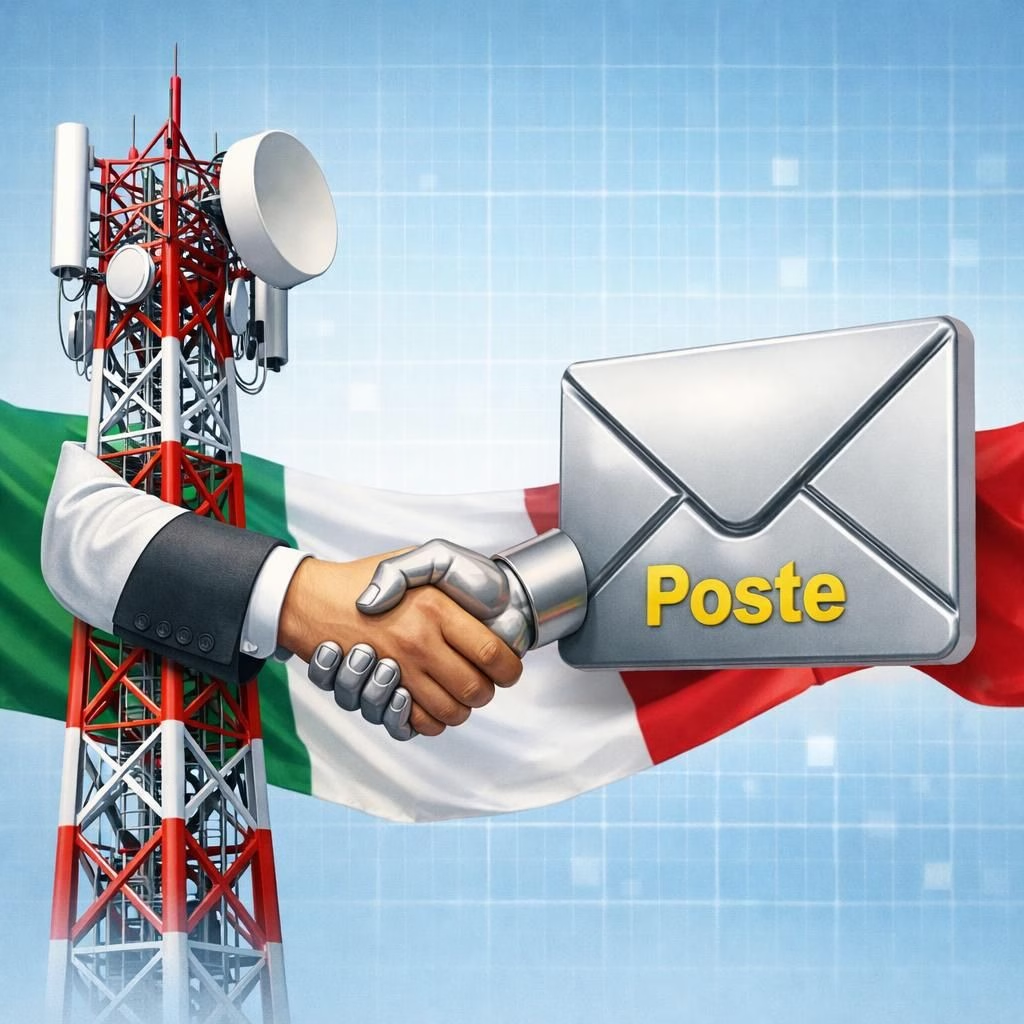
Telecom Italia and Poste Italiane stand at the crossroads of modernization and governance in 2026. Pietro Labriola frames the €10.8 billion bid to take full control as a practical step, not theater. He argues consolidation is necessary to strengthen Europe’s telecom sector as market boundaries blur and digital services scale across platforms. The plan would bring Telecom Italia back under government influence after decades of privatisation, while Poste Italiane would leverage its vast retail network to distribute Telecom Italia services.
Telecom Italia and Poste Italiane: 2026 Convergence
The proposed combination aims to realign ownership with a clearer path to scale. Telecom Italia would regain a stronger backbone, while Poste Italiane would integrate Telecom Italia services into its broad domestic platform. This is not a hostile takeover; it is a strategic alignment designed to accelerate investment in digital infrastructure, including cloud, IT, and content delivery. The government, as a key stakeholder in Telecom Italia, would participate in oversight through a transition that seeks market discipline and public accountability.
Telecom Italia and Poste Italiane: Driving Scale and Investment
Telecom Italia would anchor the platform as the core network asset, while scale unlocks capital for the next generation of services. Labriola emphasizes speed and backing to compete in cloud, IT, and content. The merged entity would direct capital to data centers, cybersecurity, and edge computing, while expanding fiber and 5G reach across Italy. Poste Italiane would help distribute telecom services through its logistics and trusted brand, enhancing cross-selling opportunities. DXC Technology has recently expanded its footprint in enterprise IT, illustrating how the digital ecosystem is converging with connectivity.
Poste Italiane as a partner in a national digital platform
Public policy recognizes critical infrastructure as a national asset, with Telecom Italia remaining a major stakeholder and the government overseeing major decisions on the deal. The plan seeks to balance public oversight with private-sector efficiency, acknowledging that the digital ecosystem blends content, cloud, and connectivity. The governance challenge becomes a roadmap: clear incentives, transparent pricing, and strong regulatory guardrails to protect consumers. A well-defined process would help ensure fair competition while keeping Italy competitive on a global stage.
From a financial perspective, the merger could create a powerful mix of network assets, retail reach, and digital services for Telecom Italia, while Poste Italiane would need to align its retail network with telecom services. It would test antitrust boundaries and cross-border appetite, raising questions about competition and consumer choice. The narrative remains optimistic—so long as disciplined execution keeps cross-sell economics fair and investment steady for Telecom Italia. Expect regulatory scrutiny, investor interest, and robust debate as 2026 unfolds.
We invite readers to share your thoughts in the comments and tell us how you see this unfolding in 2026. Do you believe a Telecom Italia and Poste Italiane union will accelerate digital progress or raise governance concerns?
Original article attribution: We thank Bloomberg for the original coverage and insights that helped shape this analysis. Source: https://www.bloomberg.com
External context
- Bloomberg coverage of European telecom consolidation
- Reuters coverage on telecom sector shifts
- EU digital strategy overview