

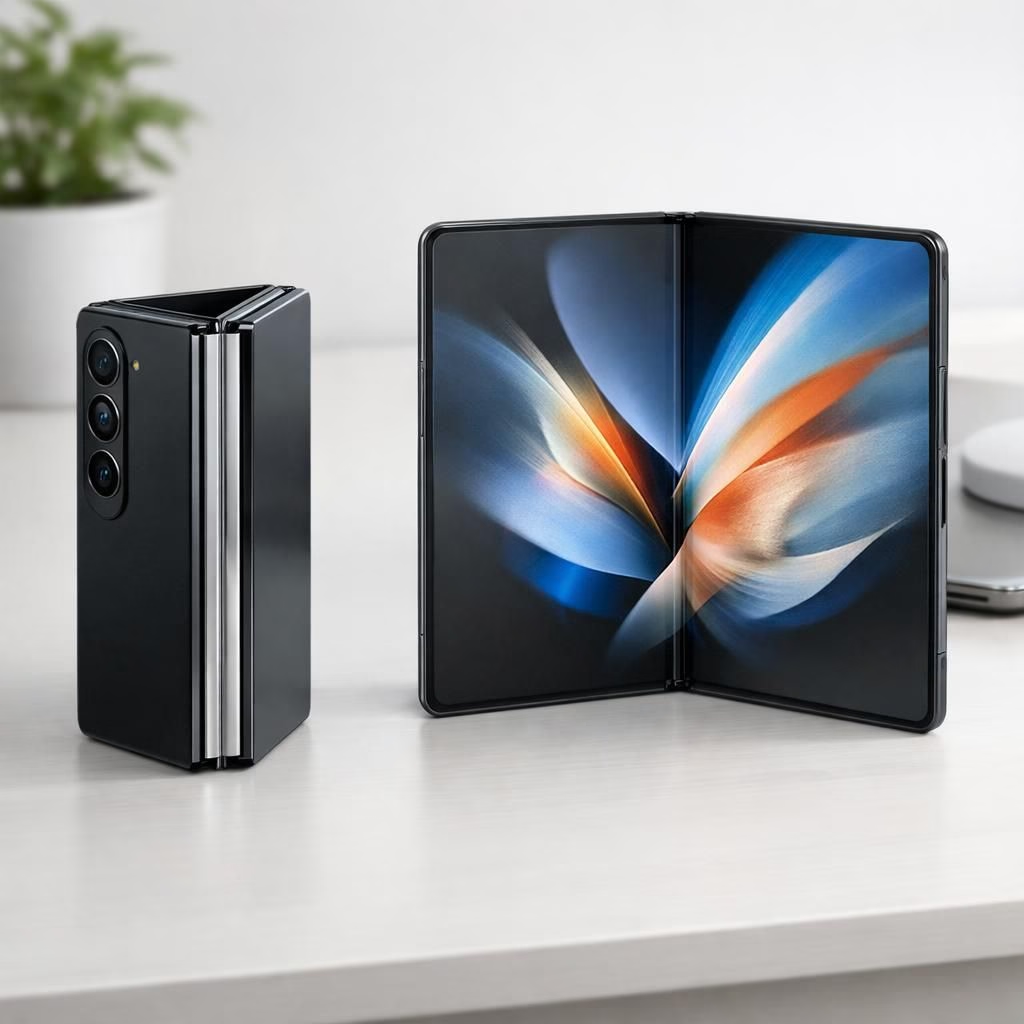
Welcome to a breezy briefing on GalaxyZFold8 and TechLeaks2026. The world of foldables keeps folding, and so do our expectations. In 2026, Samsung fans and gadget watchers chase rumors, renders, and the occasional official confirmation. Expect bold promises, marketing magic, and a few practical tweaks that might actually improve daily use. GalaxyZFold8 and TechLeaks2026 collide in a story about resilience, reliability, and the art of not overhyping a hinge.
GalaxyZFold8: What the leaks promise for 2026
The chatter points toward a larger inner display, thinner bezels, and a sturdier hinge. The Fold phone category isn’t just about wow factor; it’s about lasting value. For GalaxyZFold8, expect improved durability, a quieter but sturdier hinge, and a camera array that keeps up with social feeds. Software tweaks aim to smooth multitasking on the unfolded screen and reduce accidental touches when the device sits half-ajar in your bag. Think endurance, not drama—though a dramatic launch event wouldn’t hurt.
RUMOR ROUNDUP: a brighter outer display that’s easier to read in sunlight, and a premium shell that resists dings without turning the device into a brick. Battery life will likely be pragmatic rather than epoch-defining, but optimization can still make a measurable difference in real-world use. In short, GalaxyZFold8 could redefine the foldable experience.
According to insiders, GalaxyZFold8 could redefine the foldable experience.
TechLeaks2026: An early look at the Fold and Flip 8
The Flip 8 is billed as the companion piece that actually makes the bigger foldable ecosystem feel cohesive. Expect a refined cover display, more efficient battery usage when the device is closed, and smarter gestures that feel natural rather than novelty. The folding device race isn’t just about screen real estate; it’s about how gracefully the phone doubles as a compact companion and a mini workstation when opened. The rumors point to smoother transition animations, quicker app re-sumption after folding, and a camera system that remains usable in tight spaces—urban adventures included.
On the hardware side, the 8-series could bring a lighter chassis and more durable materials. The software side may emphasize better app continuity, with developers nudged toward improved multi-window layouts that don’t punish you for switching apps while the screen is in flux. TechLeaks2026 also hints at a lighter shell and a more reliable hinge.
In practice, you’ll likely see a mix of software polish and hardware resilience. The two devices are positioned to appeal to both power users who crave additional features and everyday users who want a phone that behaves like a normal, reliable gadget most of the time. The broader narrative remains: foldables are no longer niche experiments but practical, even delightful, tools for modern life.
From a consumer perspective, the real test is value: how the Fold 8 and Flip 8 justify their price tag through durability, battery life, camera quality, and user-friendly software. The conversation isn’t just about new numbers or new colors; it’s about a more integrated experience that makes daily tasks feel smoother without requiring a graduate-level manual to operate the hinge.
Practical takeaways for buyers include checking for real-world battery life in folded vs. unfolded modes, evaluating how case options affect the hinge movement, and testing the camera in mixed lighting to gauge how well the software handles HDR and noise. The market is shifting toward more reliable foldables, and early impressions suggest these devices aim to deliver a balanced mix of performance, practicality, and a touch of whimsy for 2026 tech fans.
Whether you’re a casual user, a productivity hacker, or a spec-obsessed enthusiast, the Fold 8s seem designed to blend into everyday life rather than demand a lab bench and a USB-C extender. The emphasis remains on real-world usability: durable hinges, usable cover displays, and software that respects the user’s time rather than forcing them to relearn basic tasks every month.
Throughout the year, keep an eye on how Samsung refines software features like multitasking, app continuity, and camera behavior in both folded and unfolded states. The company’s track record suggests steady improvements, and the ecosystem approach could be the differentiator that finally makes foldables mainstream rather than a niche obsession.
Finally, if you’re curious about the broader market, other brands and renderers are offering competing ideas—and some may actually push the envelope in interesting ways. The key for 2026 is not just bigger screens or thinner bezels; it’s smarter software, improved durability, and a foldable experience that feels almost normal most days—a paradox worth embracing with a smile.
We invite you to share your thoughts in the comments below. How do you weigh the trade-offs between durability, price, and everyday usability when considering a foldable device?
Special thanks to Mashable for the original reporting that informed this analysis. Original coverage: Samsung Galaxy Z Fold 8 launch date leaks. We’re grateful for the detailed early reporting that sparked this thoughtful reflection.
External references
- Samsung Newsroom: Foldable devices and the future
- The Verge: Foldables and the evolving smartphone form factor
- TechRadar: Galaxy Z Fold-8 rumors and expectations