

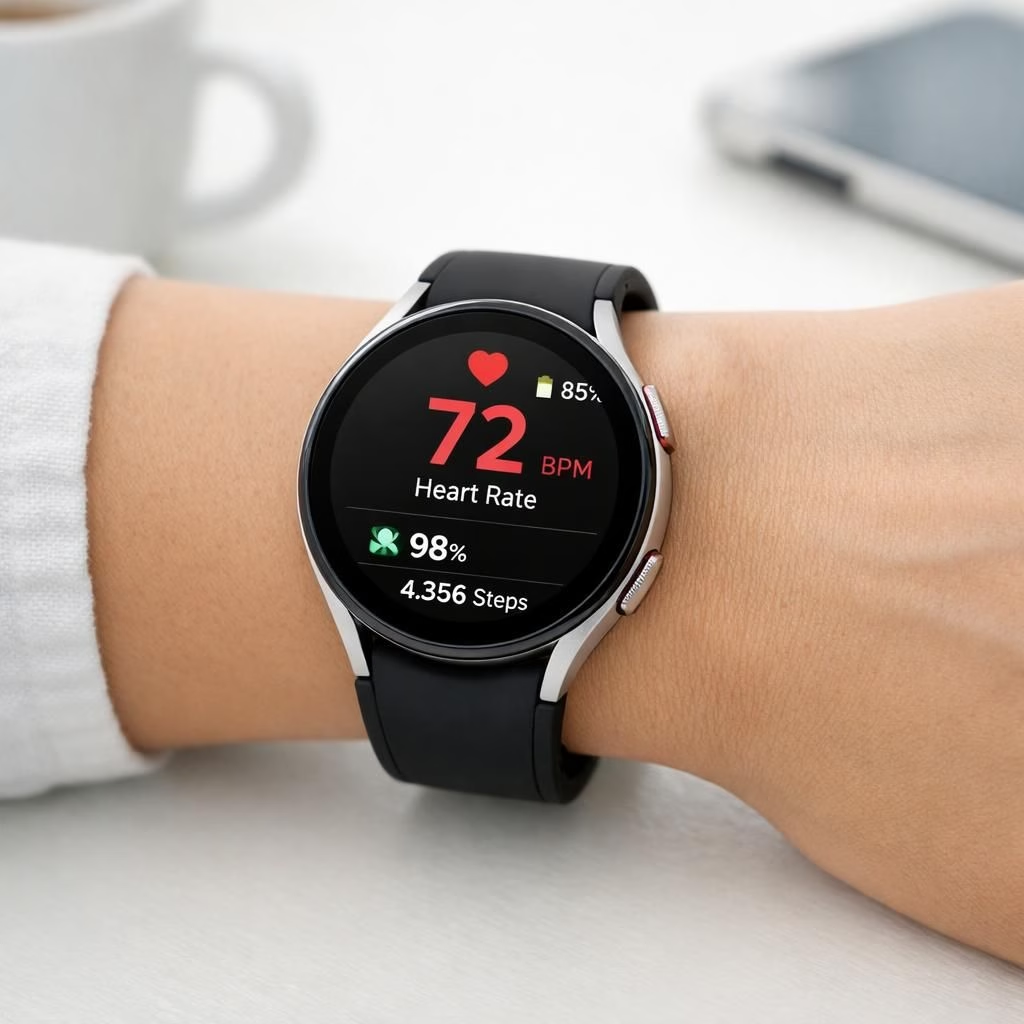
AI health and the Galaxy Watch craze converge as Samsung announces the Galaxy Watch 9 and Ultra 2. It blends smarter health insights with a wink of humor and a promise of longer battery life. It’s not just tech bragging; it’s practical wellness and a friendly digital coach on your wrist. AI health and the Galaxy Watch are not buzzwords; they are now core to everyday life.
AI health on a friendlier wrist
The Galaxy Watch 9 and Ultra 2 bring enhanced biosensors, smarter on-device analytics, and a more robust on-wrist AI assistant that can flag anomalies in your heart rate, sleep, and activity patterns. The AI health routines run locally, with privacy-preserving processing, and offer context-aware alerts. This helps users identify early illness signs or fatigue symptoms before they become dramatic. Yes, your wrist is now a tiny doctor with excellent bedside manner.
In practice, you’ll see suggestions for water intake, sleep schedules, and stress management that feel like a friendly nudge rather than a nag. The AI health layer remains efficient, not intrusive, and it respects user preferences while staying useful. Samsung emphasizes that the data stays on device when possible, with optional cloud backup for cross-device continuity, which keeps the vibe friendly and privacy-conscious.
Galaxy Watch longevity and battery confidence
Regarding battery life, Samsung highlights endurance in both models. The Ultra 2 gains bigger battery capacity and smarter charging routines, while the Galaxy Watch 9 stays featherlight and wearable all day with headroom for workouts. The software polish is evident: snappy menus, faster app launches, and a health dashboard that doesn’t overwhelm. The Galaxy Watch suite continues to offer reliable activity tracking, ECG, SpO2, and sleep analysis with improvements to nighttime battery behavior and wake-time readiness.
Battery life is more than a number. It translates to real-world confidence. Users can track workouts, monitor recovery, and receive timely alerts about hydration and rest. The Galaxy Watch hardware and software integration reduces the number of times you say, “I forgot to charge it again.” The improved battery management keeps your wrist companion ready for the day’s surprises, from a spontaneous hike to a late-night coding sprint.
Galaxy Watch synergy
The synergy between Galaxy Watch features and AI health insights creates a practical value proposition for 2026 wearables. The health analytics balance precision and privacy, delivering actionable cues without turning every heartbeat into a science project. For wellness enthusiasts, this pairing offers a tool that is useful rather than a gadget showpiece. The result is a more reliable health companion that won’t beg for battery mercy after a long workout.
The upgrade path from the Galaxy Watch 8 to 9 and Ultra 2 is thoughtful. The changes aren’t dramatic, but they compound into a more capable daily driver. The design stays comfortable, the screen remains legible, and the AI health prompts stay helpful rather than pedantic. If you want a smartwatch that feels like a supportive assistant instead of a needy alarm, this line delivers.
In the end, the big story is balance: better health data, more battery life, and smarter on-device AI that respects your privacy while offering practical guidance. The Galaxy Watch 9 and Ultra 2 give users a refined toolkit for staying informed about their wellness without turning every glance at the wrist into a clinical appointment.
Have you tested the Galaxy Watch 9 or Ultra 2? How did the AI health prompts land for you? Share your thoughts in the comments below.
Original article inspiration and background: Special thanks to Mashable for the coverage of the Galaxy Watch 9, Ultra 2, and AI features. See Mashable’s article here: Mashable article.
External perspectives and further reading
For additional context on how wearables are evolving, see coverage from The Verge and Engadget. The Verge and Engadget offer broad industry context and hands-on impressions.
Samsung’s own briefing on the devices is available through the Samsung Newsroom for official specifications and features.